
The operator interface is the bottleneck
Automation on Indian shop floors and in warehouses is accelerating: mobile robots in fulfilment centres, cobots on assembly lines, automated storage in pharma and FMCG. The robots are capable. The interface to them is still a teach pendant, a tablet menu or a ticket to the one engineer who knows the fleet software.
Meanwhile the people who run the floor think and speak in Hindi, Marathi, Tamil, Kannada and Hinglish, not in fleet-manager menus. Every re-tasking that needs a specialist is a queue, and every queue is idle robots.
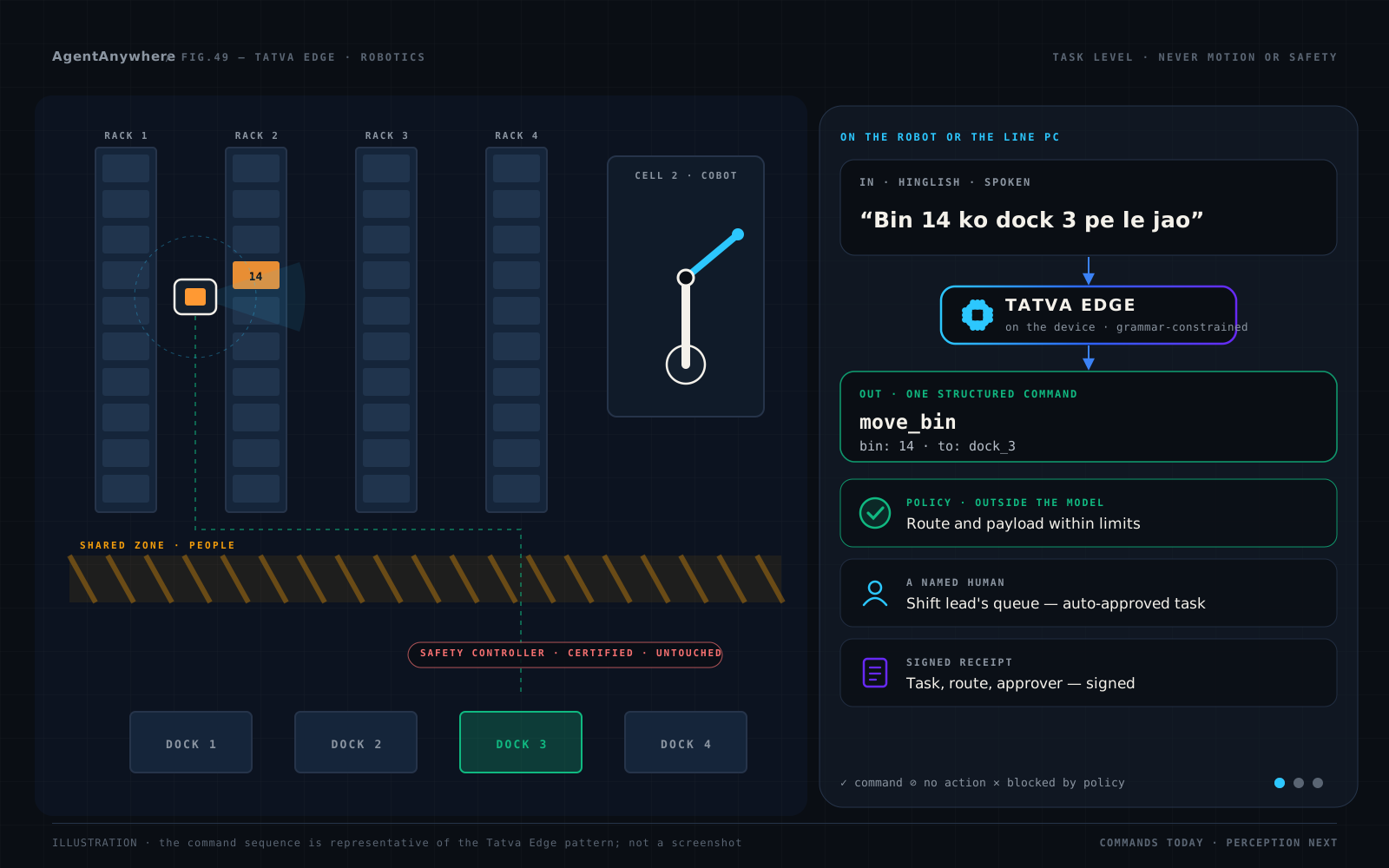
Tatva Edge lets the floor speak to the machines directly, in its own language, without a network connection and without putting a language model anywhere near motion or safety.
What it does on the floor
Task-level commands
“Pick the blue housings for line 2”, “Send AMR 7 to charging”: exact commands from your task vocabulary, with arguments named.
Indian languages and Hinglish
Operators speak as they speak. Their phrasing, in their languages, is part of the adaptation to your site.
Limits outside the model
Zone speed caps, payload limits, permitted areas and shift rules are enforced by Kavach, where no instruction can override them.
No path to safety functions
Disabling a scanner, bypassing an interlock or overriding an e-stop is not a command that exists. The answer is no action.
On the robot or the line PC
Runs offline on Pi-class boards, industrial PCs or an on-site server, with no internet and nothing leaving the plant.
A record of every instruction
Who asked for what, what was proposed, what was blocked and who approved, signed for quality and audit teams.
Use cases
Warehouse and fulfilment robots
Re-task mobile robots by voice during peaks: move bins, re-prioritise docks, send units to charge, without a fleet-software specialist.
Cobot recipe and changeover
“Switch cell 2 to the 40 mm housing recipe” selects the validated program, with the changeover logged and approved.
Plant operator assistance
Plant operators query and command equipment in Hinglish on a board with no link out, using the plant's own command set.
Inspection robots
“Run the row C inspection route in the tank farm” starts the robot's existing inspection task, with the route checked against permitted zones.
Hospital and service robots
Staff send delivery robots with a sentence (“take this to ward 4”) in their own language.
Faster onboarding for new operators
New staff get productive sooner because the interface is their language, not the menu tree.
Outcomes
On the floor
Less idle automation. Re-tasking happens when the need arises, not when a specialist is free.
Fewer wrong commands. An instruction either maps to a valid task or is refused. There is no half-understood action.
Inclusion. Operators who do not read English menus can direct the machines they work beside.
For operations and EHS leaders
Safety case unchanged. The model is outside every safety function and control loop, so certified safety is not reopened.
Data stays in the plant. Production data and instructions never leave the site, which matters for OT security and for customers' IP.
Traceability. Every instruction and approval is signed, which feeds audits, deviation reviews and continuous improvement.
See it on your own scenario
Bring your task list and how your shift leads actually phrase it. Book a live demo and we will show the pattern on your machine, your language and your rules.
What Tatva Edge is not, on the floor
It is not a safety system, a motion planner or a controller: it chooses which task to request, never how joints or wheels move. It is not on-device perception yet. It is not a predictive-maintenance product. And it is not pre-integrated with any robot vendor, PLC, fleet manager or SCADA system; integration is done with design partners on their equipment.
For the full settings, see Tatva for robotics and Tatva for industry.
More in this series
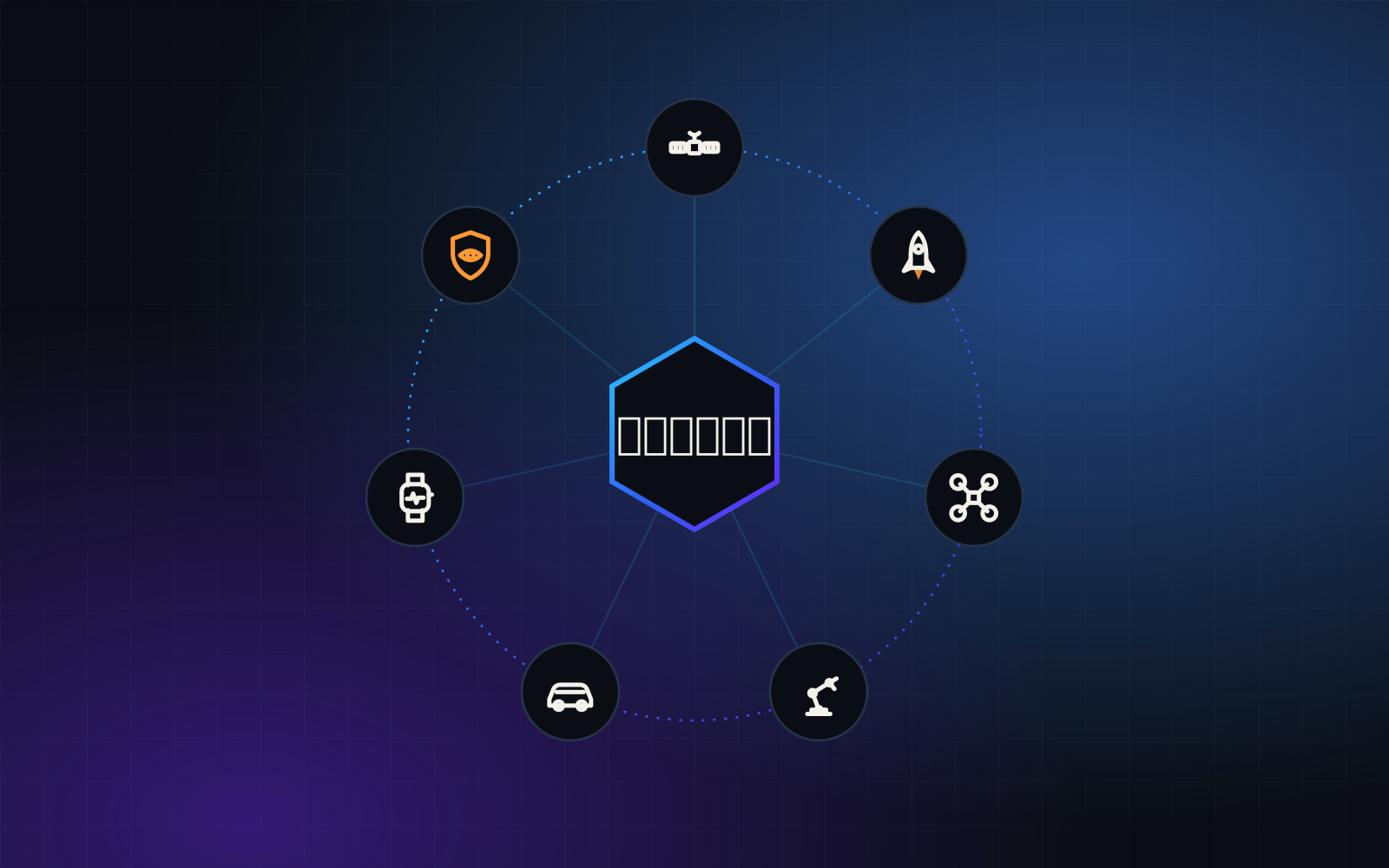
Tatva at the edge — the family, the pattern and the seven settings.
Satellites — plain-language commanding for mission operations.
Launch operations — a launch-control console that answers, and a flight computer it never touches.
Drones — missions that survive a lost link.
Vehicles — an in-cabin assistant that works in the tunnel.
Wearables — private voice on the wrist and the ear.
Defence — air-gapped, observe-and-assist, a human in command.
Frequently asked questions
Can you control industrial robots with natural language?
At the task level, yes. Tatva Edge turns an operator's instruction in Hindi, Hinglish, English or another Indian language into exactly one command from the site's task vocabulary, such as move a bin or select a recipe. Motion, control loops and safety functions stay with the robot's own controllers.
Is it safe to put a language model near robots?
Only if it is kept out of safety and control. Tatva Edge never sits in a safety path or control loop, limits such as zone speed caps are enforced by policy outside the model, commands that would disable safety devices do not exist in its vocabulary, and every instruction is logged and signed.
Does it need Wi-Fi or the cloud?
No. It runs offline on the robot's computer, an industrial PC or an on-site server. Instructions and production data never leave the plant.
Which robots and PLCs does it integrate with?
Integration is done with design partners against their own equipment and command set; no vendor integration is claimed out of the box. Tatva Edge is in private preview.
Written by
AgentAnywhere Research
The team that builds the platform and the models
AgentAnywhere Research writes about the platform, the model families and the trust layer we build and run in India. Where a figure is ours, it says what it covers; where something is a demonstration or in preview, it says so.