
TATVA · ROBOTICS
Private previewSay it in plain language. The robot plans the action — or declines.
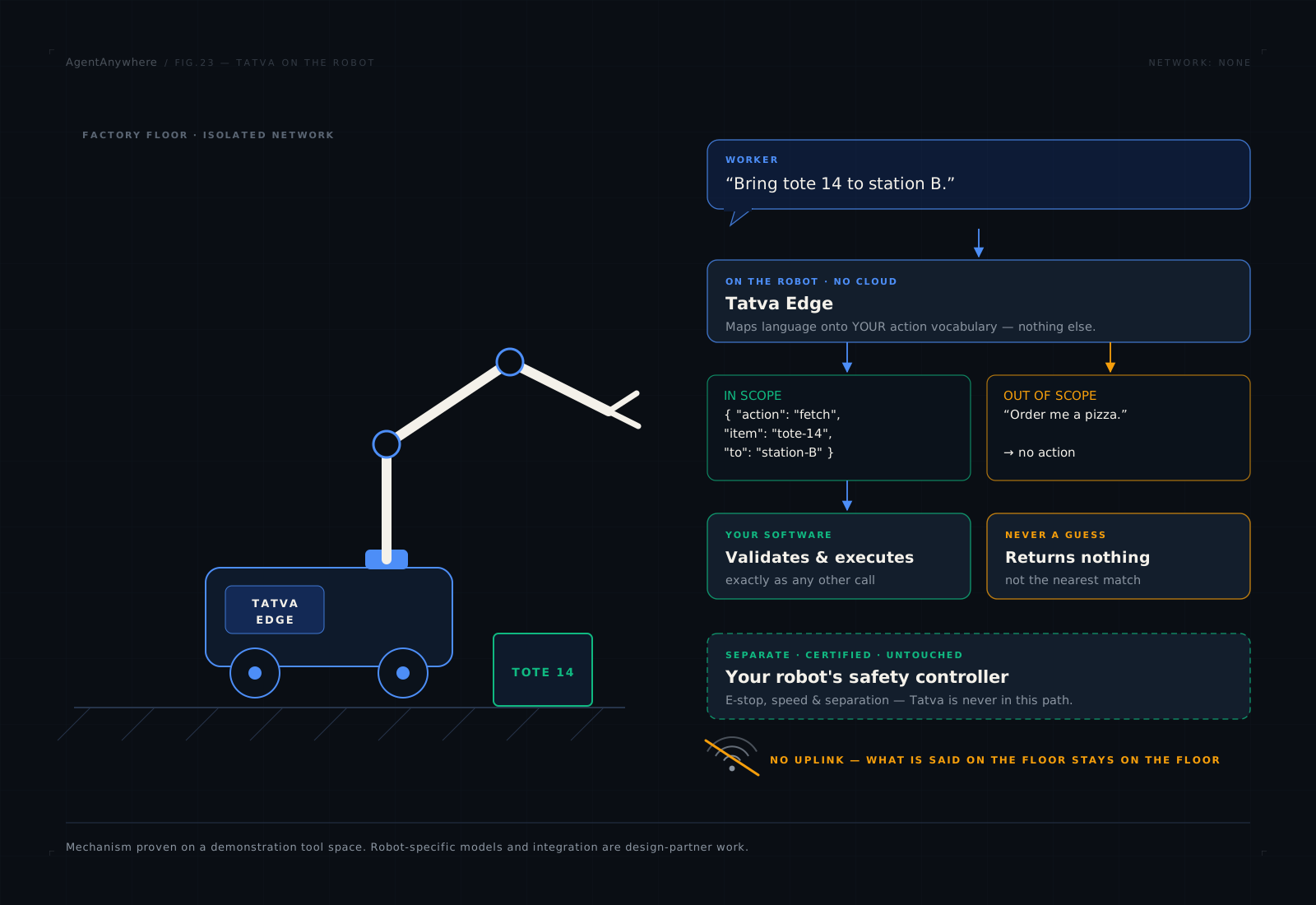
Tatva Edge runs on the robot, offline. A worker's instruction becomes one exact, structured action from a vocabulary you define; a request with no in-scope action returns nothing. No cloud round-trip, no floor data leaving the building. Built in India, in private preview.
In short
Tatva for robotics is an on-device AI model from AgentAnywhere that runs on the robot itself, with no internet connection. It converts a plain-language instruction into one structured action from a vocabulary the integrator defines, and returns no action when a request is out of scope. It is built in India, works offline or air-gapped, and is in private preview.
- Runs on
- The robot's own compute — no cloud, no network required.
- Does today
- Plain language → one structured action, or no action if out of scope.
- Stays yours
- The action vocabulary, the floor data, and the safety system.
- Status
- Private preview. Robot-specific builds with design partners.
Claims last reviewed · Tatva is in private preview.
The interface to a robot should be a sentence.
Most robots are programmed by the few and used by the many. The person standing next to the machine — a line operator, a warehouse picker, a nurse, a technician — usually cannot tell it what they need without a pendant, a tablet flow, or a call to someone who can.
Tatva closes that gap on the robot itself. A sentence goes in; one exact action comes out, in the structured form your robot's software already understands. Because the model is on-board, it works in the places robots actually work: factory floors with no outside network, warehouses with dead zones, hospitals and labs where floor data must not leave the building.
A small model with a narrow job is the safe design.
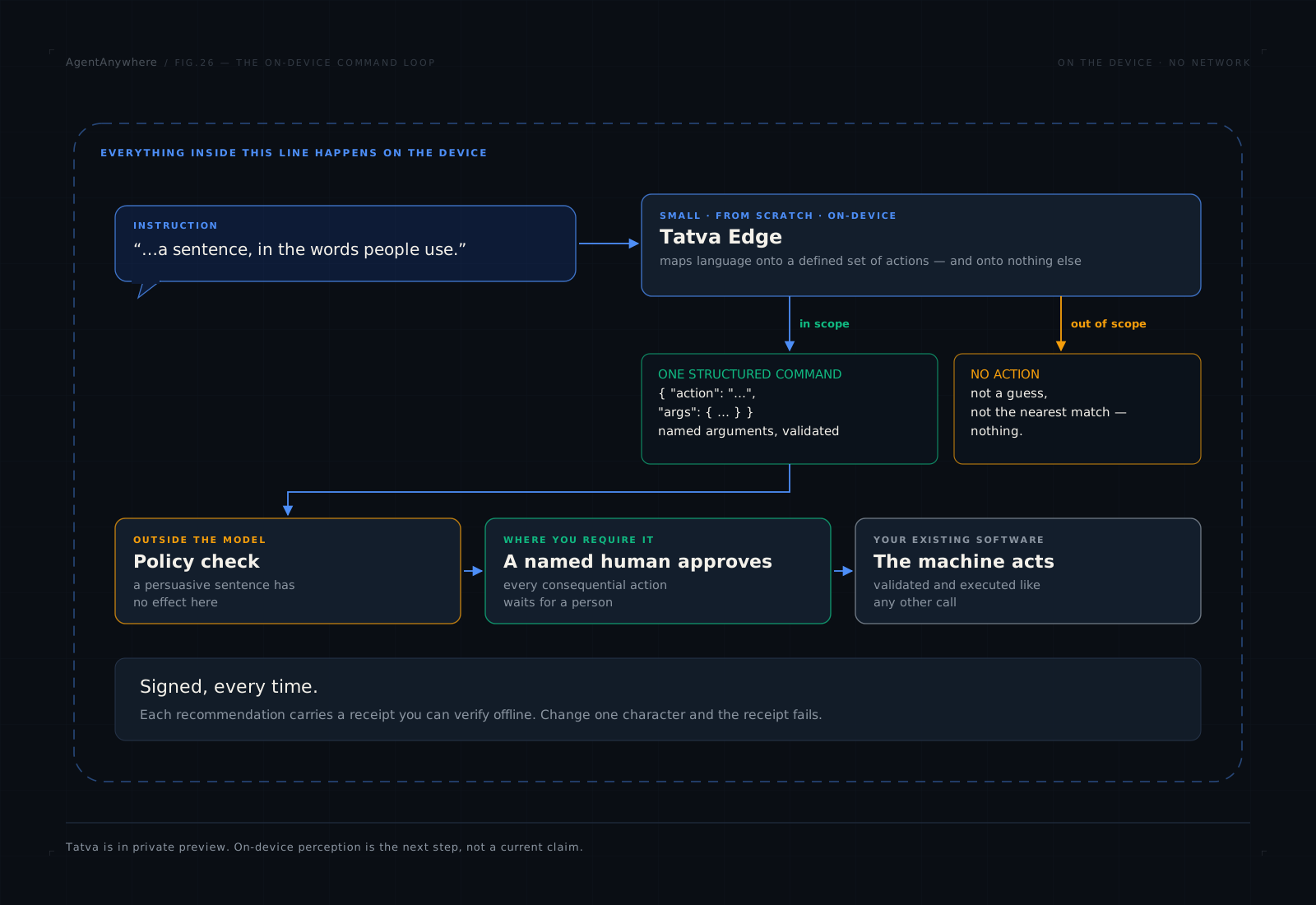
A general chatbot bolted to a robot will always say something. Tatva Edge is built the other way round.
It only speaks your vocabulary
You define the actions the robot may take and their arguments. Tatva Edge maps language onto that set and nothing else — there is no free-text path from a sentence to an actuator.
The output is a structured action with named arguments, so your existing software validates it exactly as it would validate any other call.
It knows how to say no
When a request has no in-scope action, the model returns nothing. Not a guess, not the nearest match — nothing. In our captured replays, every result is real recorded model output, checked against the intended action.
Anything consequential still passes a policy check outside the model and, where you require it, a named human's approval.
Where it fits.
Factory floors
Cells and lines on isolated networks, where a cloud-dependent assistant is a non-starter before the pilot begins.
Warehouses & logistics
Mobile robots in large sheds with patchy coverage: the instruction is understood on the robot, not at the far end of a dropped connection.
Inspection robots
Crawlers and legged platforms in plants, tunnels and substations — long stretches out of link, and nothing allowed off-site.
Service robots
Hospitals, labs and public spaces where what people say to a machine is personal data that should never leave it.
Robot makers
A sovereign language interface to ship inside your product, on your compute, under your brand.
Local-first by design
The model talks to a local broker on the machine. There is no uplink to configure because there is no uplink.
Your language, including the ones your floor speaks.
Tatva is trained from scratch in India, with Indian languages and English in the mix by design. For a shop floor, that is not a nicety: the person giving the instruction should be able to give it in the language they think in.
Language coverage for a specific deployment is something we scope with you and measure, not something we assert in a brochure.
What is proven, and what is being built.
What is proven: a small, from-scratch tool-calling model that emits only valid structured actions and declines out-of-scope requests, running entirely on-device. You can watch real captured runs in our demo hub.
What is being built: robot-specific models and the integration with a particular robot's software stack. Those captures are on a demonstration tool space, and we label them that way. This is design-partner work, and we would rather tell you now than let you find out in week three.
What Tatva for robotics is not.
A language model near moving machinery deserves a very clear edge. Here is ours.
- It is not a safety system. Emergency stops, speed and separation monitoring, and every functional-safety function stay with your robot's certified safety controller. Tatva never sits in that path.
- It is not a motion planner or a controller. It chooses which action to request, not how the joints move.
- It is not on-device perception yet. Vision on the robot is the next step, not a current claim.
- It is not a robot-specialised model yet. The mechanism is proven on a demonstration tool space; robot-specific builds are made with design partners.
- It is not a general chatbot. It is deliberately narrow, and that narrowness is the point.
FAQ
Frequently asked questions.
- Can you control a robot with natural language without the cloud?
- Yes. Tatva Edge runs on the robot's own compute and converts a plain-language instruction into a structured action locally, with no internet connection. Nothing the worker says, and no data from the floor, leaves the machine.
- What stops the model from making the robot do something dangerous?
- Three layers. The model can only emit actions from a vocabulary you define, and returns no action for anything outside it. A policy check outside the model can block or require approval for consequential actions. And your robot's certified safety controller is untouched — Tatva is never part of the safety path.
- Does Tatva replace our robot's control software?
- No. Tatva is a language interface in front of the software you already have. It decides which action to request and with what arguments; your existing stack validates and executes it.
- Which languages can workers use?
- Tatva is trained from scratch in India with Indian languages and English in the training mix by design. The exact language coverage for a deployment is scoped and measured with you rather than claimed generically.
- Is this available now?
- Tatva is in private preview. The on-device command mechanism is proven and can be seen as real captured runs; robot-specific models and integration are built with design partners. Talk to us if you make or operate robots in offline or restricted environments.
Give your robot a language it can be spoken to in.
Tatva is in private preview. We are working with robot makers and operators whose machines run where the cloud is not welcome. Bring your robot and your action set.