
PLATFORM · FLOW STUDIO · AGENT LAB · ORCHESTRATOR · REGISTRY
Build it visually. Run it governed. Prove it to anyone.
The AgentAnywhere platform is one runtime for the whole life of an AI agent: designed in Flow Studio by the people who own the process, extended in Agent Lab by engineers, executed by the Orchestrator as services with contracts, and governed in the Registry with named owners and a signed, chained record. Every call is masked, shielded and receipted inside your perimeter — your cloud, your jurisdiction, your keys.

In short
The AgentAnywhere platform is four products on one runtime. Flow Studio is the visual canvas for the operations analyst who knows the workflow. Agent Lab is the code-first surface for the engineer who has to wire the agent into core banking, a CRM or a ticketing system. The Orchestrator runs agents as services with contracts — routing, retries, idempotency, typed handoffs, durable state. The Registry keeps every agent, flow, prompt, model and policy under a named owner, an approval workflow and a cryptographically chained record.
Governance is the floor, not a feature. Every call an agent makes goes through the Agent Universal Gateway, where Aavaran masks sensitive data before any model sees it and Kavach blocks prompt injection inline. Every consequential action waits for a named human. Every decision leaves a signed Trust Receipt an auditor can verify without trusting us. There is no governance-off mode, because the runtime does not have one.
It runs inside your perimeter — your cloud, your jurisdiction, your keys — region-pinned or air-gapped, with our model families, built on open foundation models we serve and govern ourselves, served from Model Hub. It is in production with the agents we run our own company on, and it is the runtime under everything else on this site.
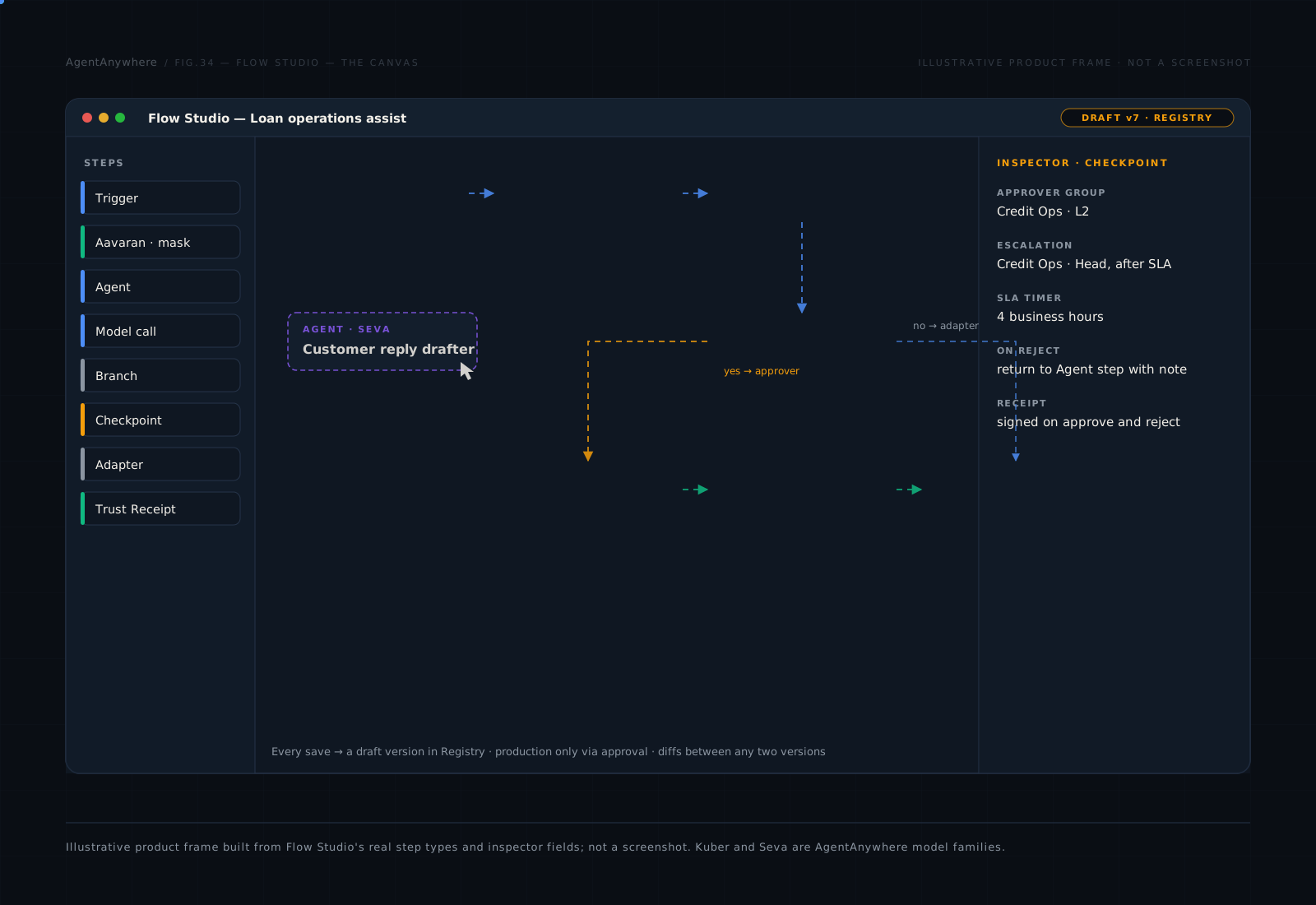
Four products. One runtime. One record.
Teams usually buy these separately and spend a year integrating them. We built them to share a runtime, a permissions model and an audit trail from the first day.
Flow Studio
Visual agent design for the people who own the process. Drag-drop steps, branch logic, human-in-the-loop checkpoints, and a live preview that runs against the same runtime as production. Every save is a draft version in Registry; production is reached only through approval.
Agent Lab
Code-first development for engineers: TypeScript and Python SDKs, local debugging, structured prompts, golden tests, contract checks and an AI-safety checklist that runs before a request is applied. Flows authored here and in Studio are the same artifact — neither is a downgrade.
Orchestrator
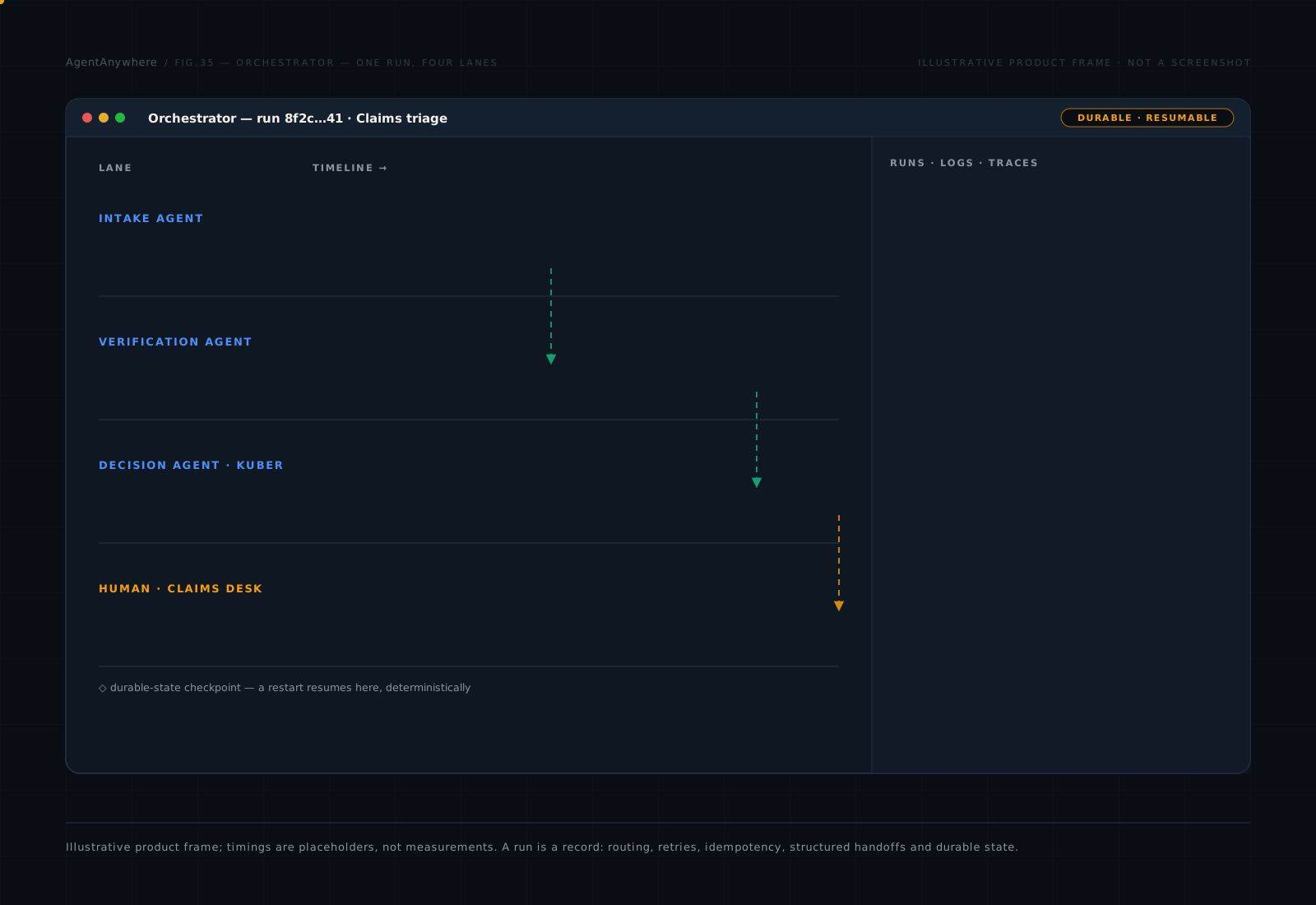
Multi-agent execution that treats agents as services with contracts. Routing, retries, idempotent steps, typed handoffs and durable state, with every step's fallback explicit and every restart deterministic. A run is a record you can replay, not a process you lost.
Registry
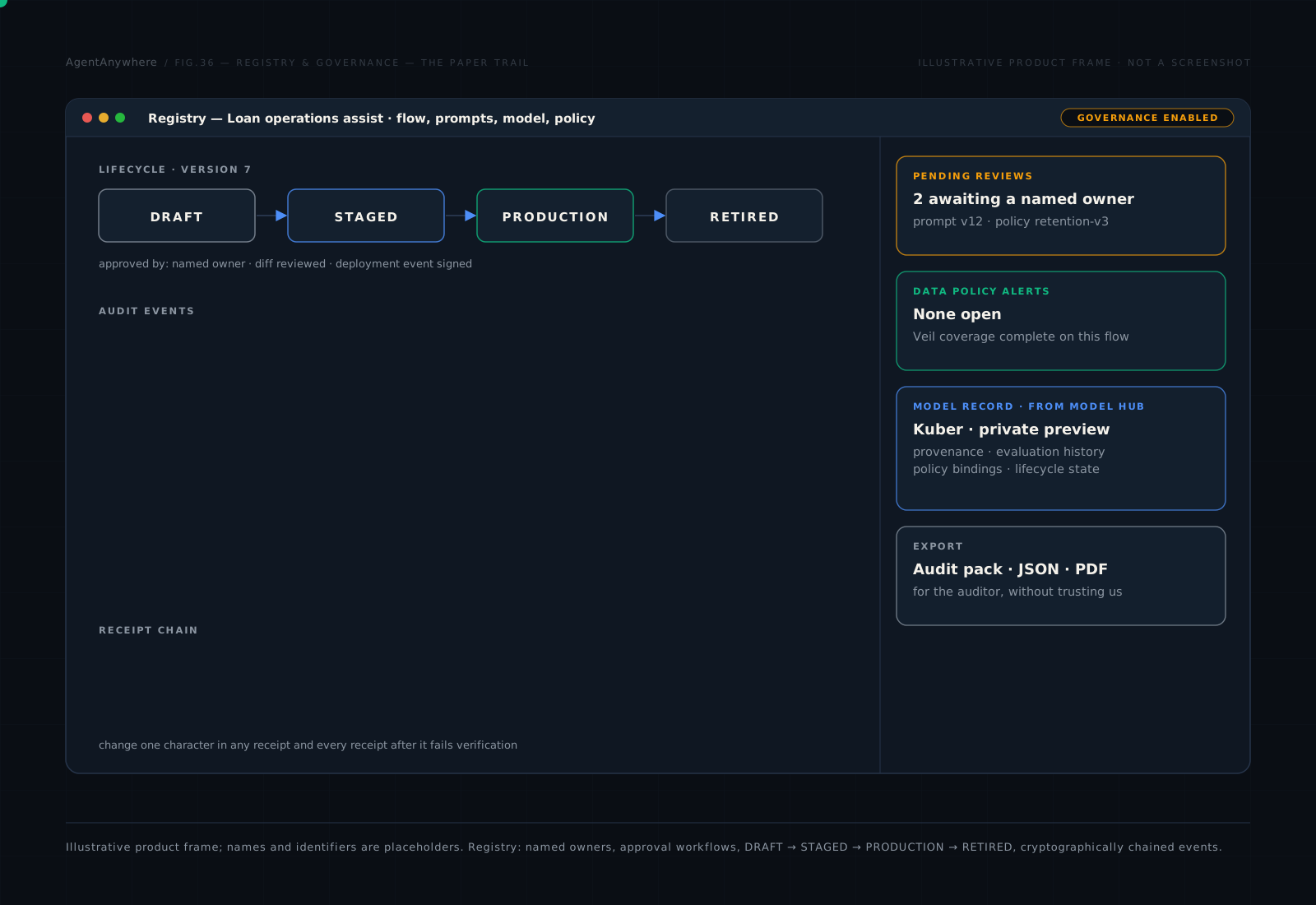
Governed lifecycle for every agent, flow, prompt, model and policy: named owners, approval workflows, DRAFT → STAGED → PRODUCTION → RETIRED, and deployment events that chain cryptographically. It is what your audit team reads when an incident needs a paper trail.
Security on every call. Audit you can hand over.
Most agent tooling was built for the demo. This platform was built for the second meeting — the one with the risk officer in it.
In the path, not in a policy document
The Agent Universal Gateway applies policy on every request an agent makes, across nine protocols from one control plane. Aavaran classifies PII, financial and regulated data and masks it — reversible tokenization or irreversible redaction — before any model, tool or embedding sees the raw value. Kavach inspects the same call for prompt injection and unsafe requests and blocks them inline. Custodian defines the policy both enforce and keeps continuous compliance signed as evidence.
None of this is a setting an agent can forget. Governance is enforced at the Gateway, outside the model, where the agent cannot talk its way around it.
A record an outsider can verify
Every mask, every block, every approval and every deployment writes a Trust Receipt — who, what, which model, which policy, when — signed, versioned and chained to the receipt before it. Change one character and every receipt after it fails verification. Receipts export as JSON and PDF for auditors.
The Registry ties the receipts to the artifacts: which version of which flow ran, with which prompt, against which model from Model Hub, approved by whom. When the ombudsman asks in six months, the answer is a query, not an investigation.
Where regulated teams run it.
The same runtime, different rooms. Where a capability is a demonstration, the page for it says so.
PSU and private banks — loan operations
An ops owner designs the flow in Flow Studio: gather the file through adapters to core banking and CRM, mask it with Aavaran, run the checks with Kuber, and stop at a named approver before any decision leaves. Registry keeps who approved what, under which model.
Contact centres and BPOs
Assist, summarise and QA agents behind a masked transcript, with a clean handoff to a human when the customer needs one, and nothing retained that a client's data-residency clause would object to. Talk to us about Seva, the service-operations family, for this work.
Insurers and NBFCs
Claims triage as a governed flow: document intake, field masking, policy checks through adapters, and human review above a threshold you set — every step in the audit record.
Defence, border security and mission operations
The human-in-command pattern: the agent recommends, a policy outside the model blocks what must never happen, a named controller approves. Our mission-operations demonstrations use simulated telemetry with real governance code, and say so on screen.
Government and public-sector programmes
Citizen-facing agents on a region-pinned or air-gapped runtime, in Indian languages, with model provenance on record and every consequential action approved by a named officer.
Anyone facing an audit
Every consequential decision leaves a signed, chained record that an external party can verify without trusting ShepHertz. That sentence is the platform's job description.
Designed for the people who actually run agents.
An agent in production has at least three constituencies: the engineer who built it, the operations team that monitors it, and the compliance officer who has to defend it. The platform gives each of them their own surface over one shared model of the agent.
An operations analyst changes a flow in Studio. The change writes a new draft into Registry, surfaces a diff to the named owner, and stays unreachable from production until the owner approves. The engineer sees the same change in Agent Lab and runs the golden tests against it locally before the approval lands. Observability records the deployment as one auditable event with both signatures attached. Not three platforms with brittle integrations — one platform, surfaced differently for each role.
Production-ready by default.
There is no separate enterprise edition that switches the production-readiness on. Sovereign deployment, governance and audit are the platform — not features bolted on when a regulator notices. Every flow you author deploys into a sovereign environment without rework; every agent inherits the policy bindings, audit trail and lifecycle; every model you select carries its evaluation history and approval record from Model Hub.
We do not promise that the first agent you build will be production-grade. We promise that the floor under it is, and that no engineering team has to build that floor before they can ship.
What we don't claim.
We do not claim the platform makes an agent correct — it makes an agent accountable, which is what lets you find out whether it was correct. We do not claim your systems must be replaced: adapters reach what you have, and anything else is an adapter or an MCP server away. The product frames on this page are illustrative, built from the product's own step types and panels; they are labelled as such and are not screenshots. And we do not claim certifications for your deployment: ShepHertz operates a control environment credentialed for SOC 2 and ISO 27001 and independently assessed for HIPAA and GDPR, and our alignment to the DPDP Act and RBI FREE-AI is designed-to-support — there to inform your assessment, not replace it.
FAQ
Frequently asked questions.
- What is the AgentAnywhere platform?
- The AgentAnywhere platform is a sovereign runtime for building, running and governing AI agents. It is four products on one runtime — Flow Studio for visual agent design, Agent Lab for code-first development, Orchestrator for multi-agent execution and Registry for governed lifecycle — with a trust layer (Gateway, Aavaran, Kavach, Custodian) applied to every call, and it runs inside the customer's own perimeter.
- What is the difference between Flow Studio and Agent Lab?
- Flow Studio is the visual canvas for the people who own the process: drag-drop steps, branch logic, human-in-the-loop checkpoints and a live preview on the production runtime. Agent Lab is the code-first surface for engineers: TypeScript and Python SDKs, local debugging, structured prompts, golden tests and contract checks. Both edit the same versioned artifact, so neither is a downgrade of the other.
- How does the platform keep a human in control of AI agents?
- Consequential actions wait for a named human approver, defined as checkpoints in the flow with approver groups, escalation and SLA timers. Policy enforced outside the model at the Gateway blocks actions that must never happen regardless of what the model recommends, and every decision is recorded as a signed, chained Trust Receipt an external party can verify.
- How is security enforced on agent calls?
- Every call an agent makes passes through the Agent Universal Gateway. Aavaran classifies and masks PII, financial and regulated data before any model sees it; Kavach inspects the call for prompt injection and unsafe requests and blocks them inline; Custodian defines the policy both enforce. Enforcement happens at the Gateway, not inside the agent, so it is not a setting an agent can forget.
- Where does the AgentAnywhere platform run?
- Inside your perimeter — on your cloud, in your jurisdiction, under your keys — including region-pinned and air-gapped deployments. Models and agents execute on your infrastructure; your data does not go to an external API. ShepHertz's model families, built on open foundation models, are served from Model Hub in the same perimeter.
- Do we have to replace our existing enterprise systems?
- No. Adapters connect agents to the systems you already run — core banking, CRM, ticketing, document stores — and anything else is an adapter or an MCP server away. The platform is operated by the teams who already run those systems and sits alongside them rather than replacing them.
- Are the product images on this page real screenshots?
- No. The Flow Studio, Orchestrator and Registry frames are illustrative animated figures built from the product's own step types, inspector fields and panel labels, and each is labelled as such. They show how the surfaces are organised, not a pixel-exact release; a pilot shows you the real thing on your own workload.
Run a pilot on a workflow your auditor already cares about.
One queue, one named owner, inside your perimeter. Pilots run on your infrastructure against a workload you choose, with our solutions team alongside yours; most scope to six to ten weeks around a single agent that has to clear an internal review or a regulatory threshold. The first run produces its own receipts.