
The cabin is where Indian mobility meets its languages
India is building cars, electric two-wheelers, buses, trucks and tractors at scale, and the voice interface is fast becoming a differentiator. But most assistants depend on a cloud connection that disappears on ghat roads, in tunnels, on rural highways and in underground parking, and they were trained for a kind of English that few Indian drivers speak.
There is also a question of trust. What is said in a car is personal: where you are going, who you are calling, what you said to your family. Sending all of it to a foreign cloud to set the fan speed is hard to justify, and harder under India's data-protection rules.
Tatva Edge answers both at once: the understanding happens on the vehicle, and the conversation stays there.
What it does in the cabin
Hinglish and Indian languages
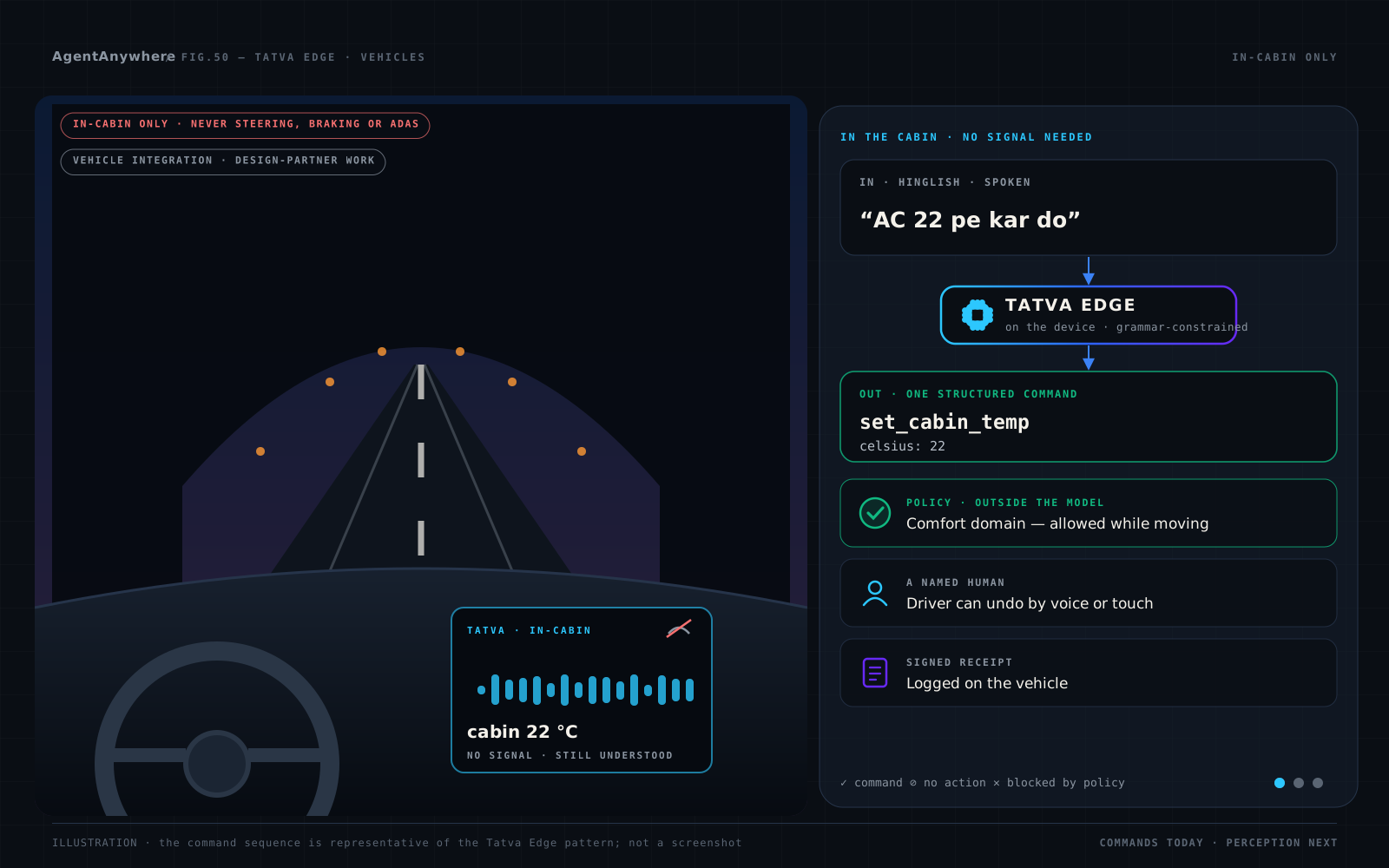
Drivers speak as they speak, mixing English and Hindi mid-sentence, or in their own language. The model maps it to one command.
Works without coverage
The command is understood on the vehicle, so tunnels, ghats and basements do not take the assistant away.
One command, never a monologue
Climate, windows, seats, media, calls and navigation requests become exact commands, not chat. Fewer words, less distraction.
Driving is not a verb it has
Steering, braking, acceleration and ADAS are outside the vocabulary. The model cannot be talked into them.
Rules for moving vehicles
Policy outside the model decides what is allowed while moving, for example voice-only feedback, or no video while driving.
Private by construction
What is said in the cabin stays in the cabin. There is no cloud round-trip to leak, log or monetise.
Use cases
Passenger cars and SUVs
An in-cabin assistant for comfort, media, calls and navigation that works everywhere the car goes.
Electric two-wheelers
Helmet or handlebar voice for navigation, ride modes and range queries, with no phone tether needed for understanding.
Commercial fleets and buses
Drivers log trips, report issues and query routes by voice in their language, with every request logged for the fleet owner.
Tractors and farm equipment
Cab controls and information requests in regional languages, far from any tower. Cab only, never implement or driving control.
OEMs and tier-1 suppliers
A made-in-India embedded voice layer to ship under your brand, on your head unit, with no per-query cloud cost.
Accessible mobility
Voice-first control for drivers and passengers who find touchscreens hard, in the language they are most comfortable in.
Outcomes
For drivers and riders
An assistant that is always there. No “please check your connection” on the road that needs it most.
Understood in their own mix of languages, not only in a narrow kind of English.
Eyes on the road. Short commands and short confirmations instead of menus.
For OEMs and fleet owners
A sovereign differentiator. An Indian-language voice feature that does not depend on a foreign platform or its pricing.
No per-query cloud bill. Understanding runs on the vehicle's own compute.
Simpler privacy compliance. Cabin audio and requests stay on the vehicle, which is easier to explain to customers and regulators.
See it on your own scenario
Bring your cabin command set and the way your drivers really talk. Book a live demo and we will show the pattern on your machine, your language and your rules.
What Tatva Edge is not, in a vehicle
It is not a driving system and is not part of any driver-assistance function. It is not connected to safety-critical vehicle functions. It is not shown running on an automotive head unit yet: our demonstrations run on laptop- and Pi-class hardware, and performance on your in-vehicle hardware is something we establish with you. It is not a general chatbot in your dashboard. It is also not a speech recogniser: Tatva Edge understands the words, and turning cabin audio into words on your hardware uses an on-device speech component that we select and integrate with you. And no vehicle maker or supplier integration is claimed; that is design-partner work.
For the full setting, see Tatva for vehicles.
More in this series
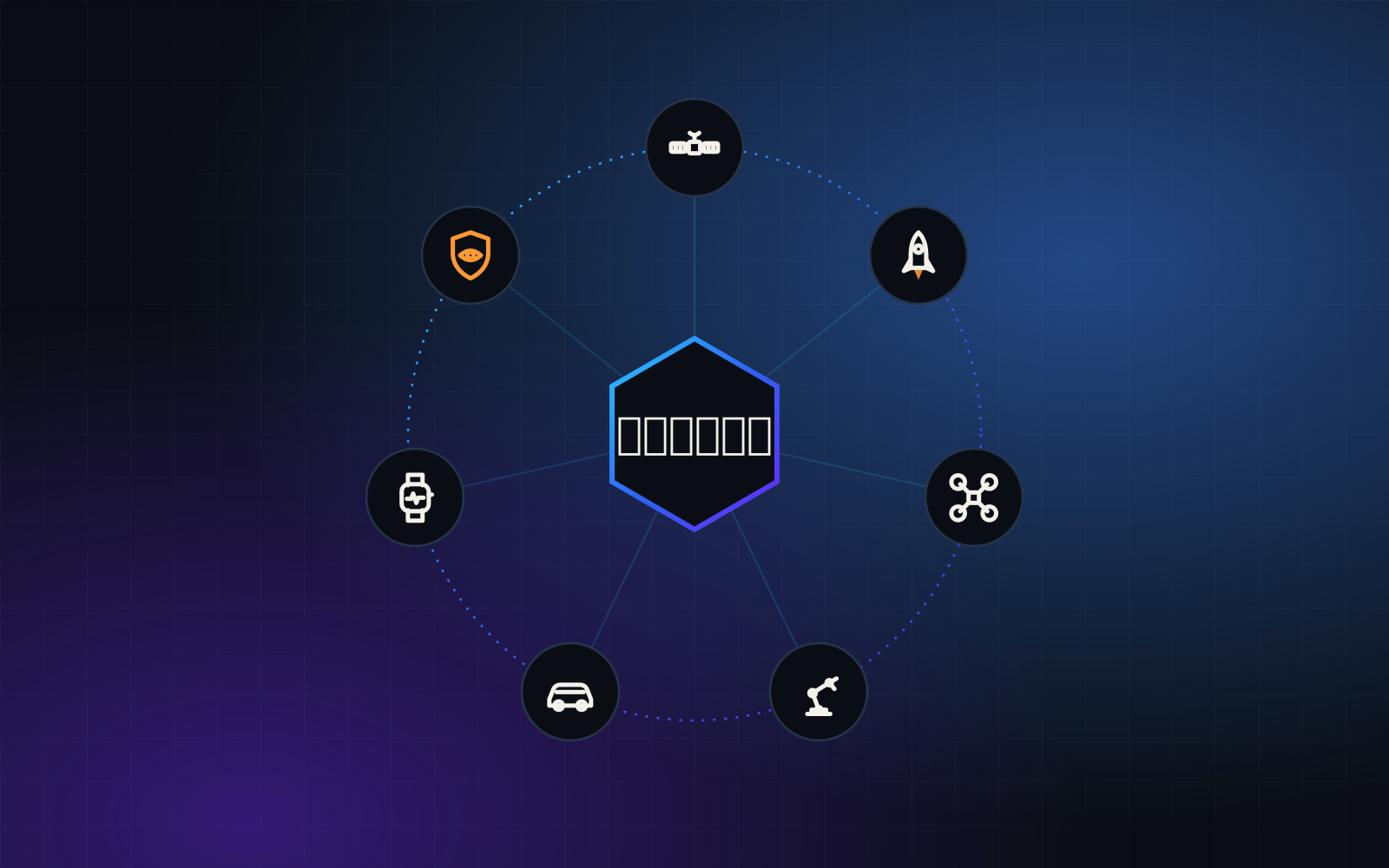
Tatva at the edge — the family, the pattern and the seven settings.
Satellites — plain-language commanding for mission operations.
Launch operations — a launch-control console that answers, and a flight computer it never touches.
Drones — missions that survive a lost link.
Robotics and industry — task-level commands on the floor, in the operator's language.
Wearables — private voice on the wrist and the ear.
Defence — air-gapped, observe-and-assist, a human in command.
Frequently asked questions
Is there an in-car voice assistant that works offline in Hindi?
Tatva Edge is designed for exactly that. It understands in-cabin requests on the vehicle, in English, Hinglish and Indian languages, with no network, and turns each into one command for comfort, navigation, media or calls. It is in private preview, with vehicle integration done through design partners.
Can Tatva Edge drive or control the car?
No. It is in-cabin only. Steering, braking, acceleration, driver assistance and every safety function are outside its vocabulary, and driving requests return no action.
Does the voice data go to the cloud?
No. Understanding happens on the vehicle's own compute, so what is said in the cabin stays in the cabin.
Can two-wheeler and commercial-vehicle makers use it?
Yes. Electric two-wheelers, buses, trucks and tractors are all in scope for in-cabin or rider commands, through the design-partner programme, on the maker's own hardware.
Written by
AgentAnywhere Research
The team that builds the platform and the models
AgentAnywhere Research writes about the platform, the model families and the trust layer we build and run in India. Where a figure is ours, it says what it covers; where something is a demonstration or in preview, it says so.