
TATVA · MACHINES, PLANTS & IOT
Private previewIntelligence for the network that is not allowed to reach the internet.
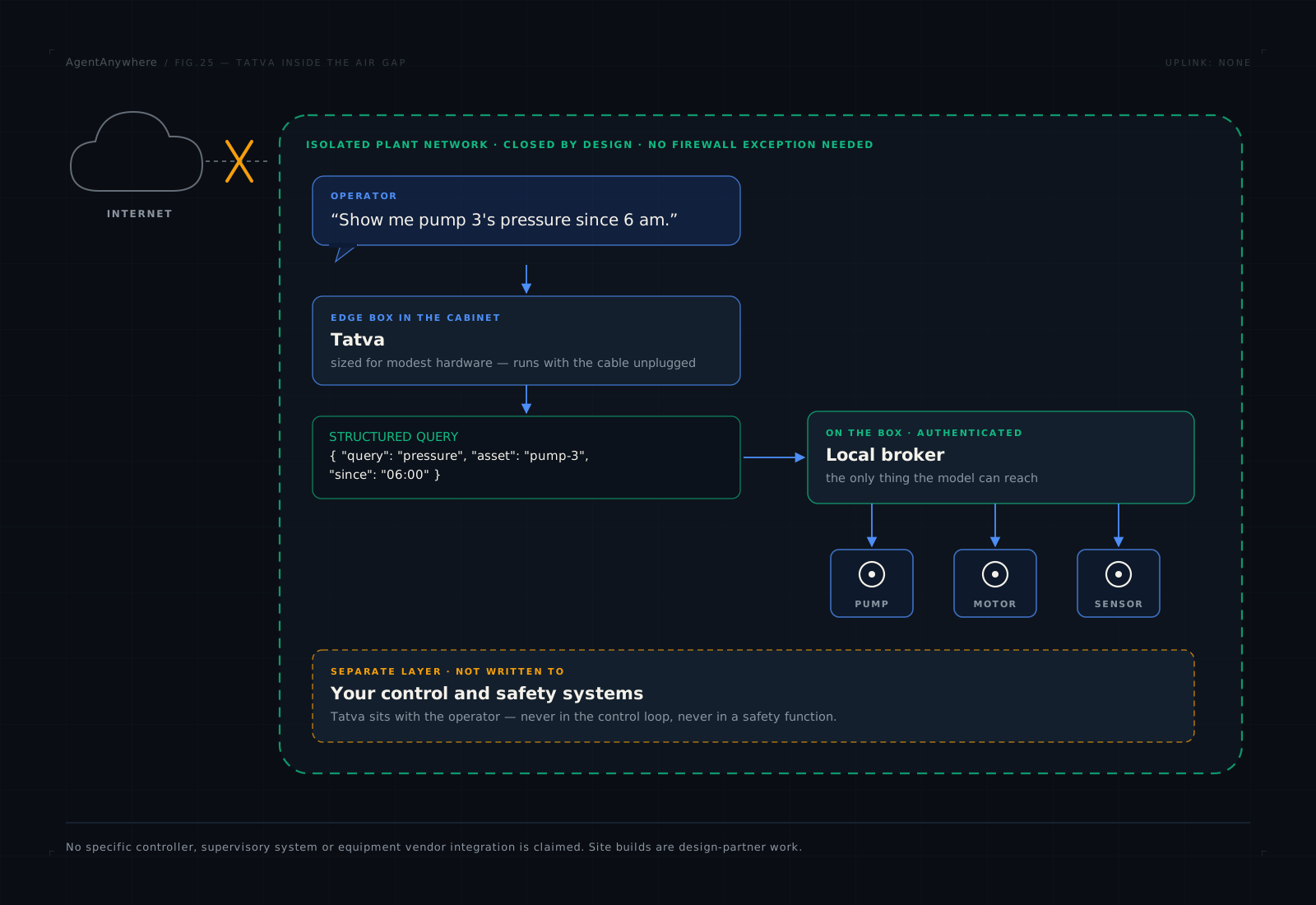
Plants, substations, rigs and remote sites run on networks that are isolated on purpose. Tatva runs inside that boundary, on an edge box or on the device itself: an operator's instruction becomes a structured command or query, with no uplink to open and no data to send out. Built in India, in private preview.
In short
Tatva for industrial and IoT use is an on-device AI model from AgentAnywhere that runs inside an isolated or air-gapped plant network, on an edge box or on the device itself. It turns an operator's plain-language instruction into a structured command or query for local equipment, with no internet connection and no data leaving the site. It is built in India and is in private preview.
- Runs
- Inside the isolated network — on an edge box or the device. No uplink.
- Does
- Operator instruction → structured command or query, or no action if out of scope.
- Talks to
- A local broker on the box. Nothing else.
- Never
- Part of the control loop or any safety function.
Claims last reviewed · Tatva is in private preview.
The most valuable data in the company is on the network that cannot leave.
Operational networks are isolated for good reasons: a plant, a substation, a rig or a water works should not be reachable from the internet, and in many sectors it is not permitted to be. That isolation is exactly why the wave of cloud AI has passed these sites by — the assistant cannot get in, and the data cannot get out.
Tatva is built for the inside of that boundary. It is small and efficient enough to run on the kind of hardware you can put in a cabinet, it needs no connection to work, and it leaves the air gap exactly as it found it.
What it is for.
Ask the equipment a question
A technician asks in plain words; Tatva turns it into the structured query your local systems already answer.
Operator instructions
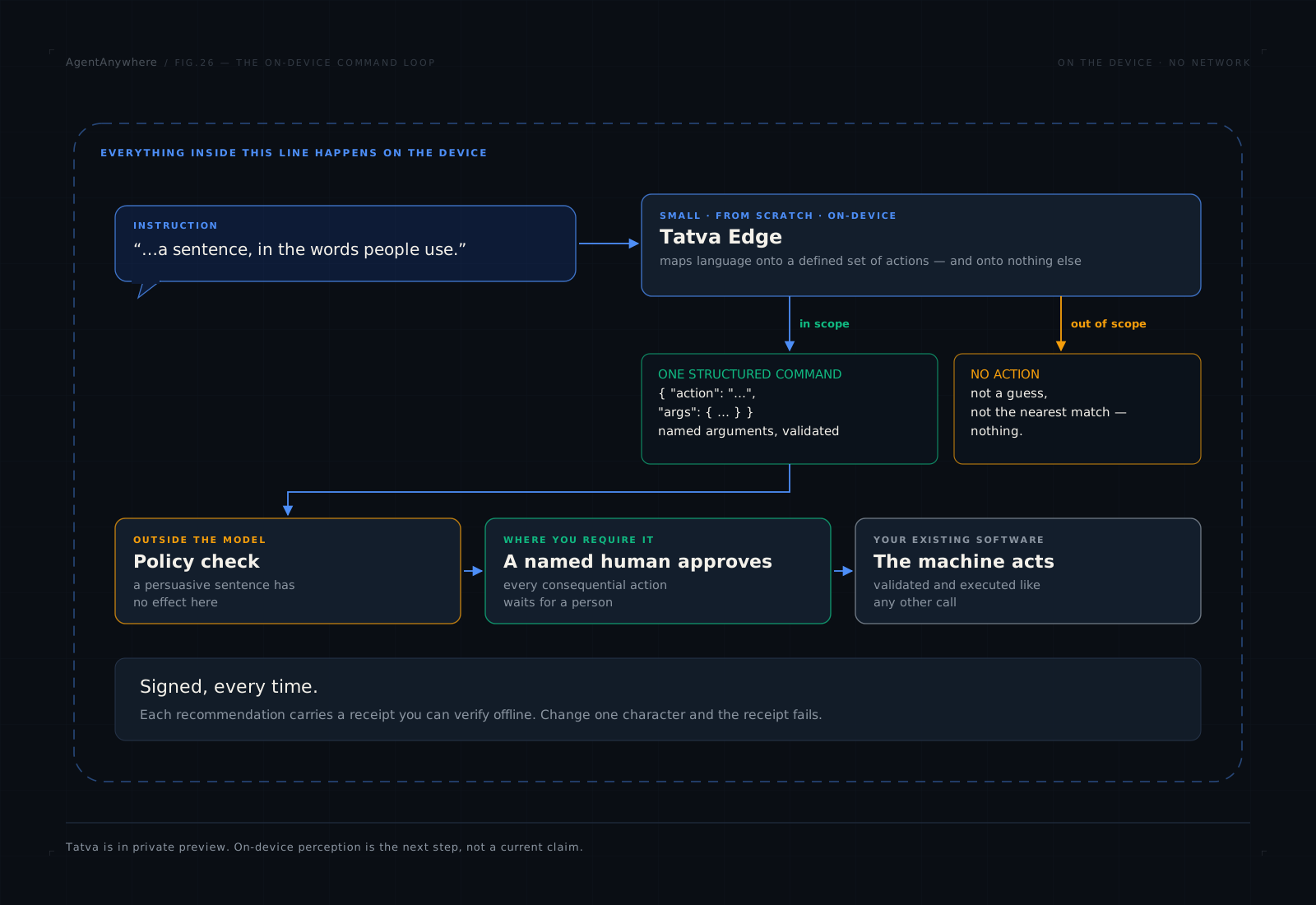
A spoken or typed instruction becomes one exact command from a vocabulary you define — then goes through your normal approvals.
Local broker, nothing else
The model reaches an authenticated broker on the box. There is no outbound path to configure, monitor or defend.
Truly air-gapped
No licence check, no telemetry, no model call home. It runs with the cable unplugged, because that is how it is meant to run.
Modest hardware
Sized for an edge box in a cabinet or a device in the field — not a rack of accelerators in a room you do not have.
A model you can account for
Trained from scratch in India on a corpus we cleaned and sealed ourselves — a composition you can be shown, for the audits these sites face.
An interface in front of your systems — never the system.
What Tatva does
It interprets what a person means and expresses it as a structured command or query from a defined set. A request with no in-scope action returns no action.
Your existing software validates and executes that request exactly as it would any other, under the permissions and approvals you already enforce.
What stays exactly as it is
Your control system keeps the control loop. Your safety systems keep every safety function. Tatva sits with the operator, not in the loop.
Your network stays closed. Adopting Tatva does not require a new firewall rule, a new vendor connection, or an exception from your security team.
Where it fits.
Manufacturing plants
Lines and cells on isolated networks, with operators who should not need a menu tree to ask a machine a question.
Energy & utilities
Substations, generation sites and water works — critical infrastructure where nothing may phone home.
Remote & unmanned sites
Rigs, mines, towers and pumping stations on thin or intermittent links, where the site has to be smart on its own.
Device & equipment makers
A sovereign language interface to build into your product, running on your hardware, with no cloud dependency to support.
What it runs on.
On an edge box, Tatva runs inside AgentAnywhere Nabhika OS, our sovereign operating-system layer. Nabhika places a kernel-level network filter and a sandbox around the model runtime, so the model reaches the local broker and nothing else, and it signs a hash-chained record of what is installed. The model cannot leave; the node can prove what it ran.
Nabhika OS is in development. The evidence we show for it today is a recorded test run, and we label it that way.
What Tatva for industry is not.
On a plant network, being clear about what a new component does not do matters more than what it does.
- It is not a control system. Tatva does not participate in any control loop and does not replace your controllers or supervisory software.
- It is not a safety system. It is never part of a safety-instrumented function or an emergency-shutdown path.
- It is not a predictive-maintenance or anomaly-detection product. It is a language interface for operators.
- It is not pre-integrated with any specific controller, supervisory system or equipment vendor. Integration is done with design partners.
- It is not an industry-specialised model yet. The on-device command mechanism is proven; site-specific builds are design-partner work.
FAQ
Frequently asked questions.
- Can AI run on an air-gapped industrial network?
- Yes. Tatva is built to run entirely inside an isolated network — on an edge box or on the device — with no internet connection, no licence check and no telemetry. The network stays closed; no firewall exception is needed.
- Does any plant data leave the site?
- No. The model runs on hardware inside your boundary and reaches only a local broker on the box. There is no outbound path, so no operational data, instruction or query is sent to a cloud or a third party.
- Does Tatva control the machines?
- No. Tatva is an operator-facing interface. It turns a person's instruction into a structured command or query that your existing software validates and executes under your existing permissions. It is never in the control loop and never part of a safety function.
- What hardware does it need?
- Tatva is small and efficient by design, intended for an edge box in a cabinet or a device in the field rather than a rack of accelerators. The right hardware for a site is something we size and measure with you.
- Why does it matter that Tatva is trained from scratch in India?
- For critical infrastructure, you need to be able to account for what a model is. Tatva is AgentAnywhere's own lineage, trained from token one on a corpus we clean and seal ourselves, with a build manifest each training run cites — a record you can be shown, not a black box borrowed from elsewhere.
Bring intelligence inside the air gap — without opening it.
Tatva is in private preview. We are working with operators and equipment makers whose networks are closed by design. Tell us about your site.