
The wearable voice problem
India is one of the world's largest markets for smartwatches, earbuds and fitness bands, and a fast-growing one for connected hearing and health devices. Voice is the natural interface for a screen the size of a coin. Yet most wearable assistants hand the request to a paired phone and then to a cloud, which means latency, a dead feature when the phone is away, and a stream of intimate data leaving the body.
Language is the second problem. A grandmother setting a medicine reminder in Marathi, a delivery rider asking for the next drop in Hinglish, a runner in Chennai starting a workout in Tamil: none of them should have to switch to English to be understood.
Tatva Edge was built to be small, to run without a network and to refuse what it is not for, which is exactly what a wearable needs.
What it brings to a wearable
Short commands, exactly
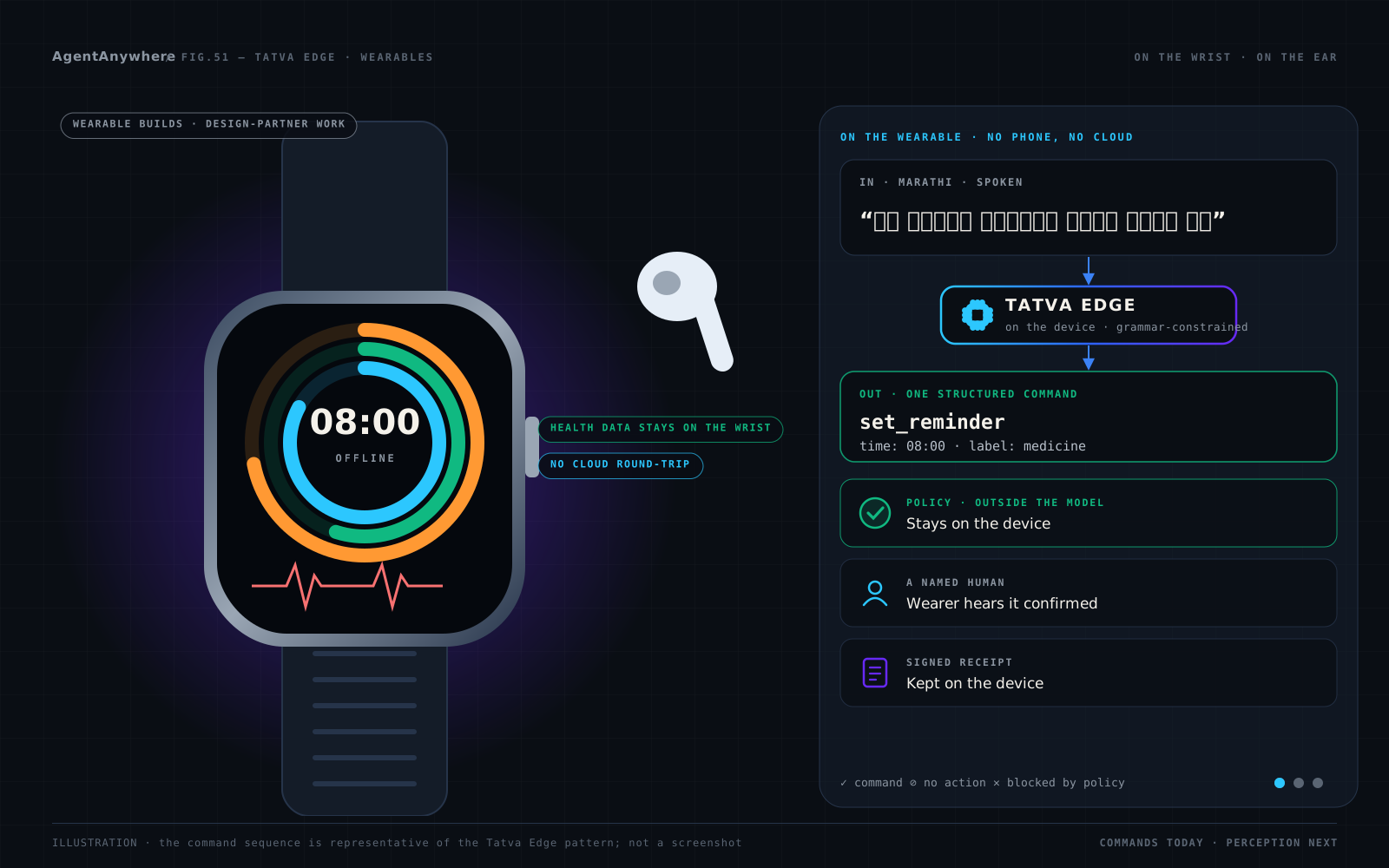
“Remind me at eight to take my medicine” becomes one set_reminder command with the time and label filled in. Nothing more, nothing invented.
Your users' languages
Indian languages and Hinglish, with your users' own phrasings part of the adaptation.
Health data stays on the device
Heart rate, sleep, location and speech are processed where they are produced. No cloud round-trip to leak or retain.
Consent outside the model
Sharing health data, calling emergency contacts or making payments are checked by rules outside the model, with the wearer asked to confirm.
Works away from the phone
On a run, in a field, in a basement: understanding does not depend on a paired phone or a signal.
Knows its limits
Not a chatbot, not a doctor. A request it has no command for returns no action, which is the right answer on a device this personal.
Use cases
Smartwatches and fitness bands
Timers, reminders, workouts, calls and settings by voice in Indian languages, fully offline.
Earbuds and hearables
Hands-free commands for calls, media and modes, understood on the bud or its case without a phone round-trip.
Elder care and assistive devices
Medicine reminders and help calls in the wearer's mother tongue, with emergency actions routed through explicit confirmation.
Rugged wearables for field workers
Linemen, miners and plant technicians log readings and call for support by voice with gloves on and no coverage.
Personnel wearables in secure sites
Voice commands inside facilities where no device may transmit, with everything processed and logged on the device.
Wearable brands and ODMs
A made-in-India on-device voice layer to differentiate your product, with no per-query cloud cost.
Outcomes
For the wearer
Voice that works in their language, without switching to English.
It works without the phone, on a run, in a field or in a hospital corridor.
Their body's data stays theirs, with any sharing an explicit, recorded choice.
For the brand
A privacy story you can prove, not just promise, which matters under India's DPDP rules and to health partners.
Lower running cost. No cloud inference bill per request.
Differentiation in one of the world's most competitive wearable markets, built on an Indian model rather than a licensed foreign assistant.
See it on your own scenario
Bring the command list for your wearable and your target languages. Book a live demo and we will show the pattern on your machine, your language and your rules.
Where this is today
Honesty first. Tatva Edge is in private preview and is demonstrated today on Raspberry-Pi-class boards, laptops and in the browser, in our own runtime. We have not shipped it on a wearable. Its size and its output discipline are why wearables are on our roadmap, and a wearable build, on your chipset and against your command set, is design-partner work.
Two more boundaries. Tatva Edge understands words; turning audio into words on your device uses an on-device speech component that we select and integrate with you. And it is not a medical device: it sets reminders and runs commands, and it does not diagnose, advise or interpret health signals.
More in this series
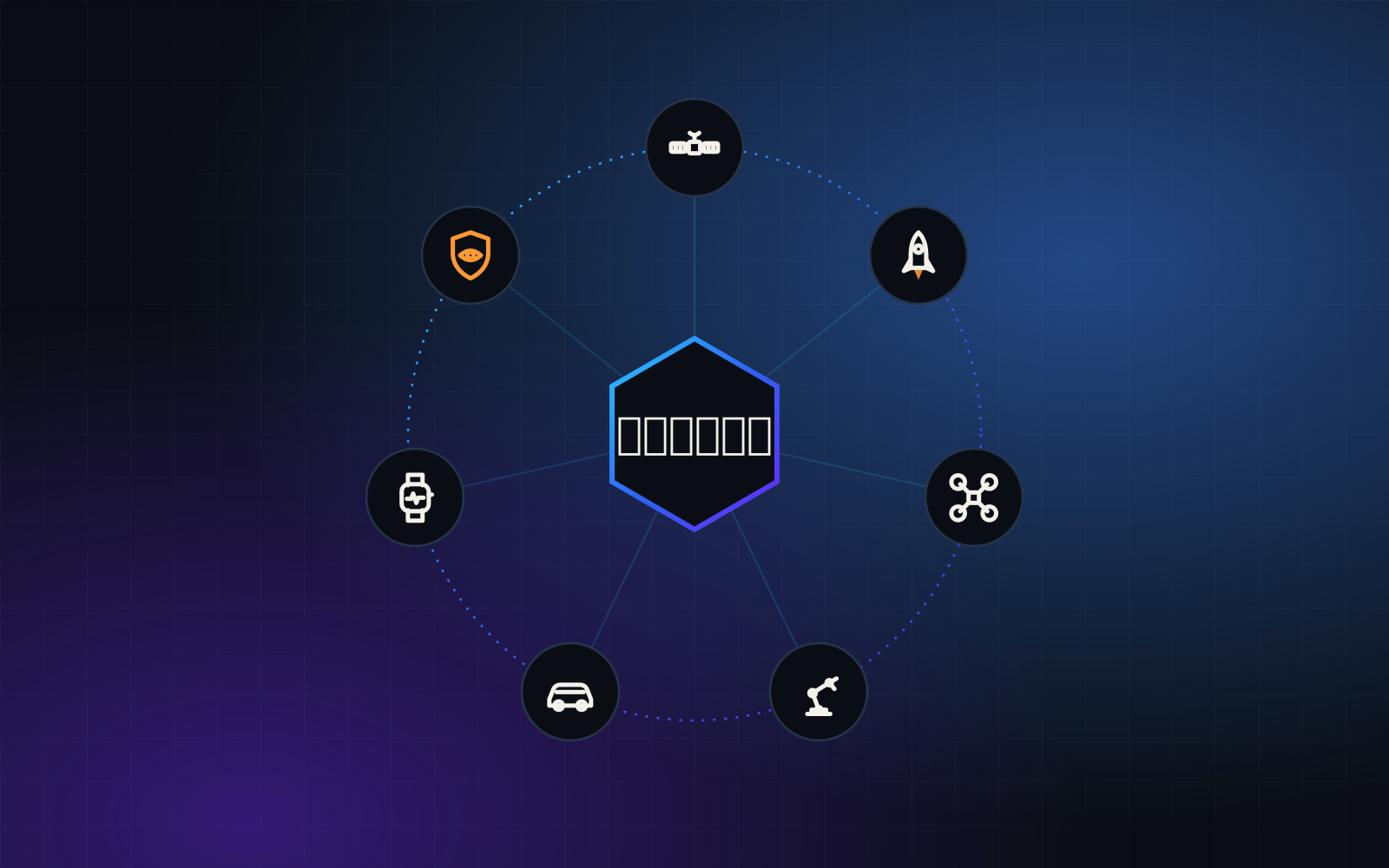
Tatva at the edge — the family, the pattern and the seven settings.
Satellites — plain-language commanding for mission operations.
Launch operations — a launch-control console that answers, and a flight computer it never touches.
Drones — missions that survive a lost link.
Robotics and industry — task-level commands on the floor, in the operator's language.
Vehicles — an in-cabin assistant that works in the tunnel.
Defence — air-gapped, observe-and-assist, a human in command.
Frequently asked questions
Can a smartwatch run an AI voice assistant offline?
That is the goal Tatva Edge is built for. It is a small command model that turns a short request into exactly one device command, or no action, with no network. It is demonstrated today on Pi-class boards, laptops and in the browser; wearable builds on a specific chipset are done with design partners.
Which languages does Tatva Edge support on a wearable?
English, Hinglish and Indian languages. The languages and phrasings your users actually use are part of adapting the model to your product.
Does health data leave the device?
No. Requests and health signals are processed on the device. Any action that would share health data is checked by a consent rule outside the model and requires the wearer's explicit confirmation.
Is Tatva Edge a medical device?
No. It turns voice requests into device commands such as reminders, timers and settings. It does not diagnose, give health advice or interpret health signals.
Written by
AgentAnywhere Research
The team that builds the platform and the models
AgentAnywhere Research writes about the platform, the model families and the trust layer we build and run in India. Where a figure is ours, it says what it covers; where something is a demonstration or in preview, it says so.