
The bottleneck in space operations is not the rocket. It is the console.
India's space economy is moving from a handful of national missions to constellations run by startups, universities and private operators. Every new satellite adds command dictionaries, procedures and operators, but not more minutes of contact. A low-Earth-orbit spacecraft is over a given ground station for only a few minutes at a time, and the team has to get the plan right before it rises.
Commanding is still done largely through dense menus, scripts and mnemonic codes. It is precise, and it is slow to learn. The failure mode is familiar to every operations lead: the right person is not on shift, a junior operator hesitates, a parameter is mistyped, and the window closes.
Tatva Edge puts a language interface on top of the command system you already trust, without replacing any of it.
What Tatva Edge does on a mission-operations console
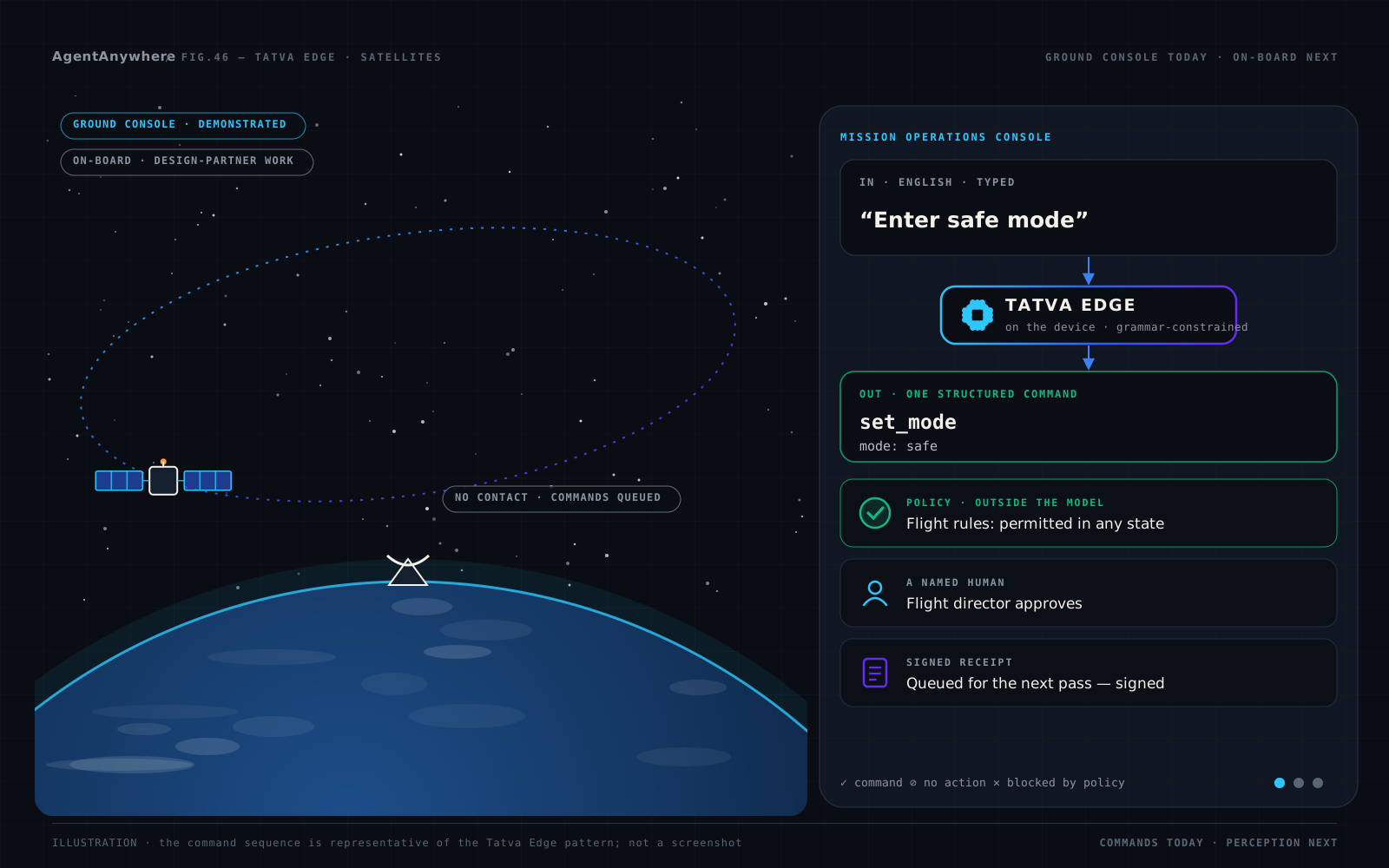
Intent to telecommand
“Switch to the backup transmitter” becomes the one command in your dictionary that does that, with its arguments named and typed. Never a guess, never free text.
Your dictionary, your grammar
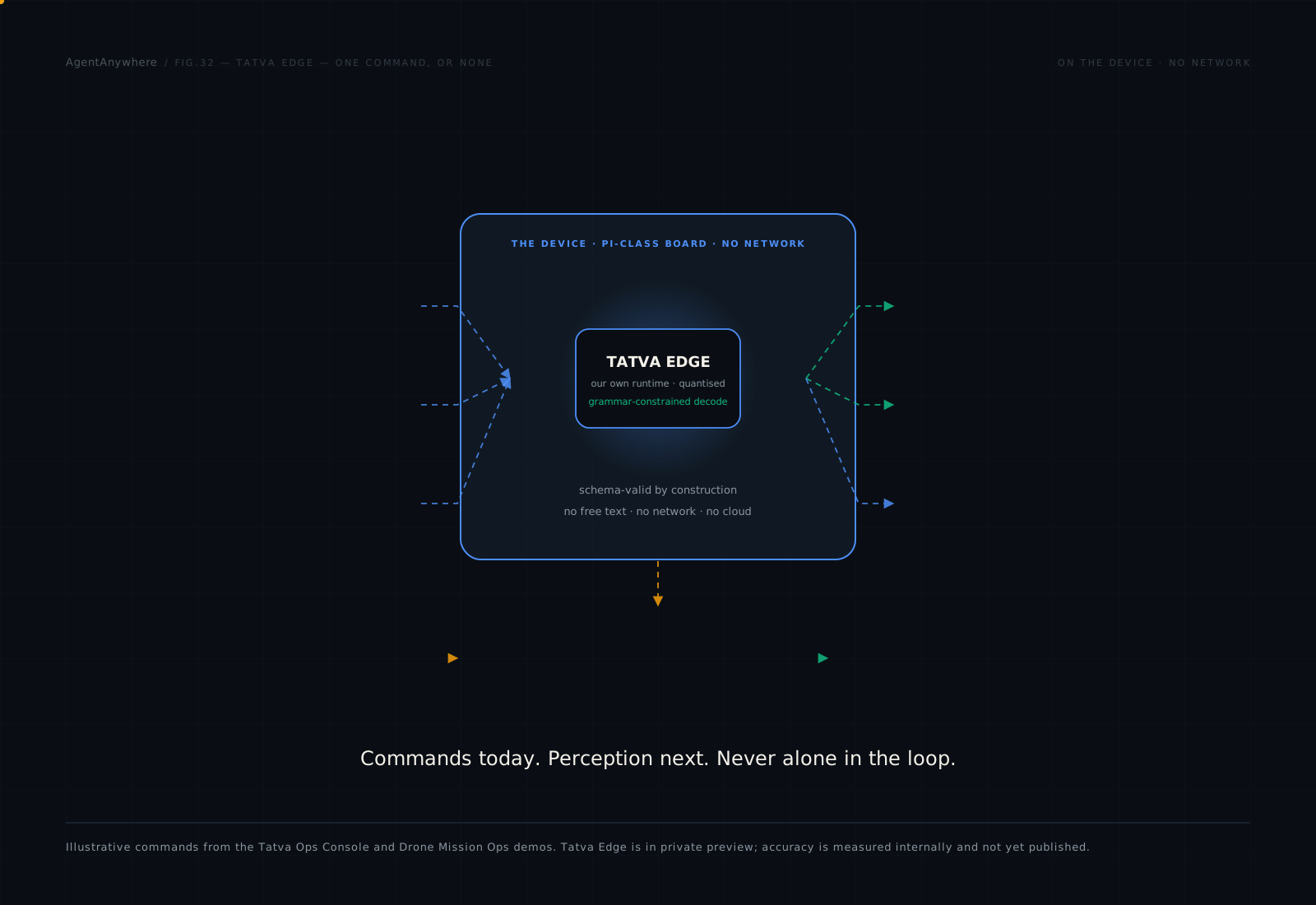
Decoding is constrained by your mission's command set, so the only possible outputs are valid commands or no action.
Flight rules outside the model
Mode restrictions, power and thermal budgets and pointing constraints are checked by policy, not by the model's judgement.
Approval and a signed record
Consequential commands wait for the named flight director. Instruction, command, check, approver and time are written as one signed receipt.
In the operator's language
English, Hinglish or an Indian language, typed or spoken. Your operators' phrasing is part of the adaptation.
Inside the ground segment
Runs on the console or a server in your control room, with no internet. Target lists and schedules never leave.
Use cases operators ask us about
Each one keeps a person in command and the existing command system in place.
Contingency response
“Enter safe mode”, “Disable the payload heater”: the right recovery command is ready for approval in seconds, instead of being found in a procedure binder under pressure.
Earth-observation tasking
“Image the Kutch coastline on the next two passes” becomes a tasking request with target and passes filled in, checked against power and storage before it is queued.
Constellation operations
A small team running many spacecraft issues the same intent across a fleet, with each command checked for each spacecraft's state.
Faster operator onboarding
New operators command in plain language while they learn the dictionary. The console always shows the exact command before it goes.
Telemetry look-ups
“Show battery temperature for the last orbit” becomes a read-only query, answered without anyone hunting through screens.
University and startup missions
Smaller teams get a safer, simpler console without building their own tooling, and keep everything in-house.
Outcomes
For the operations team
More done per pass. The plan is ready and approved before acquisition of signal, not composed during it.
Fewer command errors. A command that does not fit the dictionary cannot be produced, and one that breaks a flight rule cannot be sent.
Less dependence on a few experts. The knowledge in the command dictionary becomes usable by the whole shift.
For the mission owner
Sovereign by construction. Targets, schedules and spacecraft state stay inside your ground segment. No foreign cloud sees your mission.
An audit trail regulators and customers accept. Every command has an instruction, a check, an approver and a signature behind it.
A path on board. The same pattern, a small model that emits one command or none, is what on-board autonomy needs next.
See it on your own scenario
Bring five commands from your dictionary and the way your operators phrase them. Book a live demo and we will show the pattern on your machine, your language and your rules.
What about on board?
The long-term prize is a spacecraft that can act sensibly between passes. Tatva Edge is small enough to be a serious candidate for on-board computers, and its output discipline, a valid command or nothing, is what on-board autonomy demands. But running on a specific flight computer, under radiation and power constraints, with a mission's own fault-protection logic, is design-partner work, and we will not claim it before it is done with a partner.
Telemetry reasoning for critical systems is the work of our Sanjaya line, engaged through partner-scoped design partnerships.
What Tatva Edge is not, in space operations
It is not a flight software component and does not replace your mission control system, command database or fault protection. It does not send anything to a spacecraft on its own: a person approves and your existing system uplinks. It is not on-device perception. And it is in private preview, demonstrated in the Tatva Ops Console against simulated telemetry, with the screen saying so.
More in this series
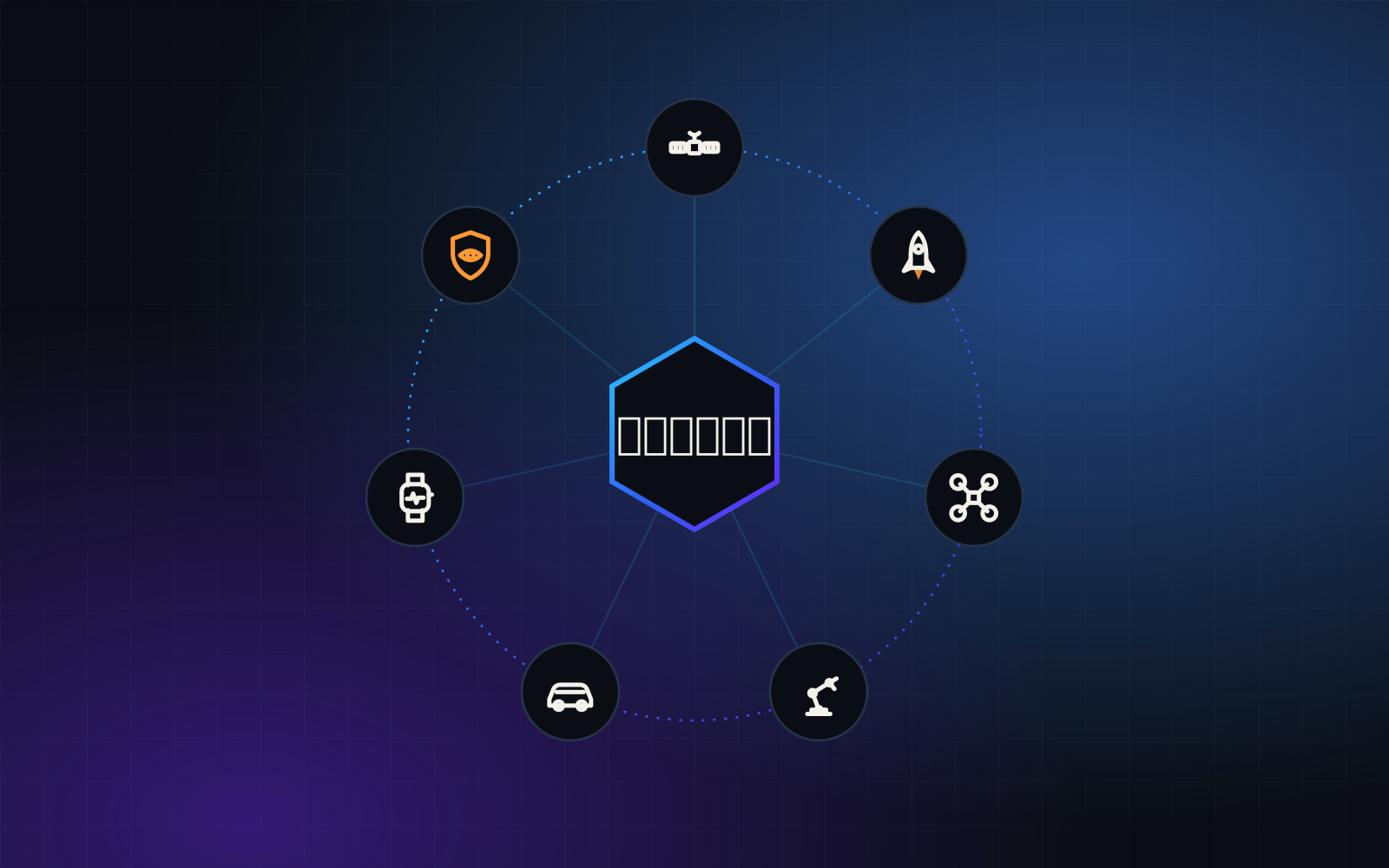
Tatva at the edge — the family, the pattern and the seven settings.
Launch operations — a launch-control console that answers, and a flight computer it never touches.
Drones — missions that survive a lost link.
Robotics and industry — task-level commands on the floor, in the operator's language.
Vehicles — an in-cabin assistant that works in the tunnel.
Wearables — private voice on the wrist and the ear.
Defence — air-gapped, observe-and-assist, a human in command.
Frequently asked questions
Can AI be used to command satellites?
Yes, as an assistant to the operator. Tatva Edge converts a plain-language instruction into exactly one command from the mission's own command dictionary, or returns no action. Flight rules are checked outside the model, a named flight director approves, and the mission's existing system performs the uplink.
Does Tatva Edge run on the satellite?
Today we demonstrate it on the ground console, where it runs with no internet connection. It is small enough to be a candidate for on-board computers, but on-board deployment on a specific spacecraft is design-partner work and is not claimed as shipped.
What stops the model from sending a dangerous command?
The model can only produce commands from your dictionary, it declines anything else, it never uplinks on its own, and every proposed command is checked against flight rules by a policy engine outside the model before a named person approves it.
Does our mission data go to a cloud AI service?
No. Tatva Edge runs on the console or on a server inside your ground segment, fully offline. Target lists, schedules and telemetry never leave your perimeter.
Which languages can operators use?
English, Hinglish and Indian languages, typed or spoken. The languages and phrasings your operators actually use are part of adapting Tatva Edge to your mission.
Written by
AgentAnywhere Research
The team that builds the platform and the models
AgentAnywhere Research writes about the platform, the model families and the trust layer we build and run in India. Where a figure is ours, it says what it covers; where something is a demonstration or in preview, it says so.