
TATVA · HUMANOIDS
Private previewTell the humanoid what the shift needs. It proposes one task, or declines.
Tatva Edge runs on the humanoid, offline. A shift lead's instruction, in Hinglish, an Indian language or English, becomes one task command from a vocabulary you define. A policy outside the model blocks what must never happen, a person approves what matters, and balance, gait and joints stay with the robot's own certified controller. Built in India, in private preview.
In short
Tatva for humanoids is an on-device AI model from AgentAnywhere that runs on a humanoid robot with no internet connection. It turns a supervisor's plain-language instruction into one task command from a vocabulary the integrator defines, and returns no action when a request is out of scope. Balance, gait and joints stay with the robot's certified controller. It is built in India and in private preview.
- Runs on
- The humanoid's own compute: no cloud, no network required.
- Does today
- Plain language → one task command, or no action if out of scope.
- Never touches
- Balance, gait, joints, or any safety function.
- Status
- Private preview. Humanoid-specific builds with design partners.
Claims last reviewed · Tatva is in private preview.
A humanoid on the floor needs a language, not a pendant.
Humanoids are arriving where people already work: warehouses, plants, hospitals, labs. The people next to them are shift leads, pickers, nurses and technicians, not programmers. They need to say what the shift needs, in the language they think in, and have the robot take it as a task.
Tatva Edge does that on the robot itself. A sentence goes in; one task command comes out, in the structured form the robot's own software already understands. Because the model is on board, it works where these robots actually work: on isolated floor networks, in dead zones, and in places where what people say must not leave the building.
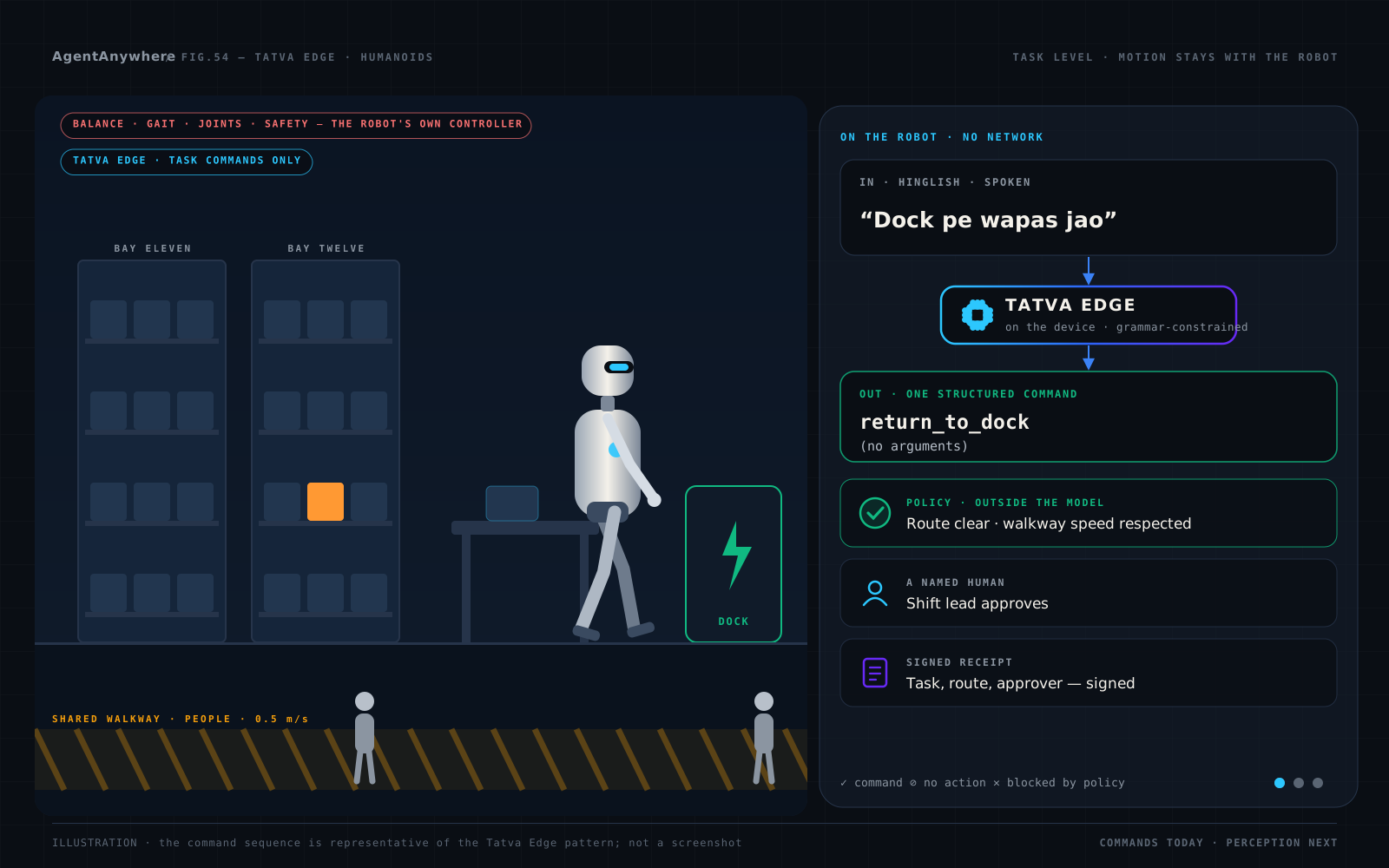
Tasks, not motion. And a model that knows how to say no.
The safe design is a narrow one. Tatva Edge decides which task to request, and nothing below that.
Tasks, not motion
You define the tasks the humanoid may take: go to a location, pick or place, return to the dock, stop. Tatva Edge maps language onto that set and nothing else. There is no free-text path from a sentence to a joint.
Balance, gait, footstep planning and every safety function stay with the robot's certified controller. Tatva is never in that path.
It knows how to say no
When a request has no in-scope task, the model returns nothing: not a guess, not the nearest match. In our captured replays, every result is real recorded model output.
Anything consequential still passes a policy check outside the model, such as no fast moves where people walk, and a named person's approval. Every step leaves a signed receipt.
Where it fits.
Warehouses & logistics
Totes, docks and bays, directed by the shift lead in plain words, on the robot.
Manufacturing lines
Cells on isolated networks, where a cloud-dependent assistant is a non-starter.
Hospitals & labs
Places where what people say to a machine is personal data that must stay on it.
Facility rounds
Routine rounds and checks, with every task and approval on the record.
Humanoid makers
A sovereign, Indian-language task interface to ship on your compute, under your brand.
Multilingual floors
English, Hinglish and Indian languages, scoped and measured with you per deployment.
What is proven, and what is being built.
What is proven: a small, from-scratch model that turns language into one valid task command, or none, entirely on the device. You can see it in Humanoid Assist on our demo hub: the humanoid and the facility are simulated, and every Tatva Edge output is real recorded model output.
What is being built: humanoid-specific models and the integration with a particular robot's software stack. That is design-partner work, done on your hardware and your task set, and we would rather say so now than let you discover it in week three.
What Tatva for humanoids is not.
A language model near a walking machine deserves a very clear edge. Here is ours.
- It is not a safety system. Stops, speed and separation monitoring and every functional-safety function stay with the robot's certified controller. Tatva never sits in that path.
- It is not a motion planner or a controller. It never touches balance, gait, footsteps or joints; it chooses which task to request.
- It is not on-device perception yet. Vision on the robot is the next step, not a current claim.
- It is not a humanoid-specialised model yet. The mechanism is proven on a ground-robot command set; humanoid builds are made with design partners.
- It is not a chatbot. It is deliberately narrow, and that narrowness is the point.
FAQ
Frequently asked questions.
- Can you control a humanoid robot with natural language without the cloud?
- At the task level, yes. Tatva Edge runs on the humanoid's own compute and turns a plain-language instruction into one task command locally, with no internet connection. The robot's own controller then carries out the motion; Tatva never controls balance, gait or joints.
- What stops a humanoid from doing something dangerous?
- Three layers. The model can only emit tasks from a vocabulary you define and returns no action otherwise. A policy check outside the model blocks what must never happen, such as moving fast where people walk, and requires a named person's approval for consequential tasks. And the robot's certified safety controller is untouched.
- Does Tatva replace the humanoid's control software?
- No. Tatva is a language interface in front of the software the robot already has. It decides which task to request and with which arguments; the robot's stack validates and executes it.
- Which languages can supervisors use?
- Tatva is trained from scratch in India with Indian languages and English in the training mix by design, and it handles Hinglish. The exact language coverage for a deployment is scoped and measured with you rather than claimed generically.
- Is Tatva for humanoids available now?
- Tatva is in private preview. The on-device task mechanism is proven and visible in the Humanoid Assist demo, where the humanoid is simulated and the model output is real. Humanoid-specific builds and integration are done with design partners.
Give your humanoid a language the floor already speaks.
Tatva is in private preview. We are working with humanoid makers and operators whose robots work where the cloud is not welcome. Bring your robot and your task set.