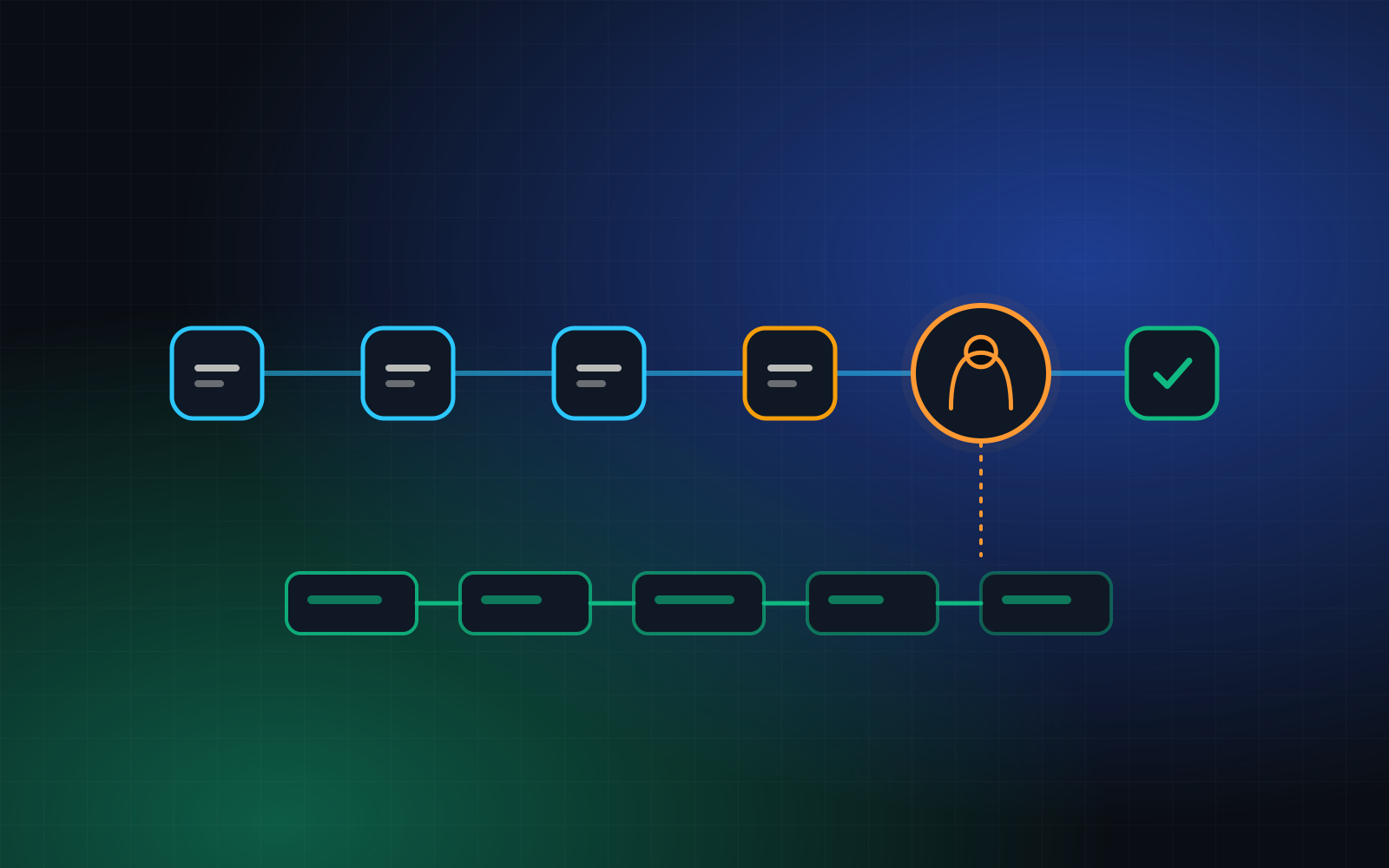

Why is a credit memo hard to hand to AI?
A relationship manager submits a working-capital request for a packaging firm: financial statements, bank statements, tax filings, a stock statement, the promoter's identity documents. The question for the bank is not whether a model can summarise a balance sheet. It is whether the bank can show what was read, what a machine wrote and who decided.
What do AI agents in banking do on a credit memo?
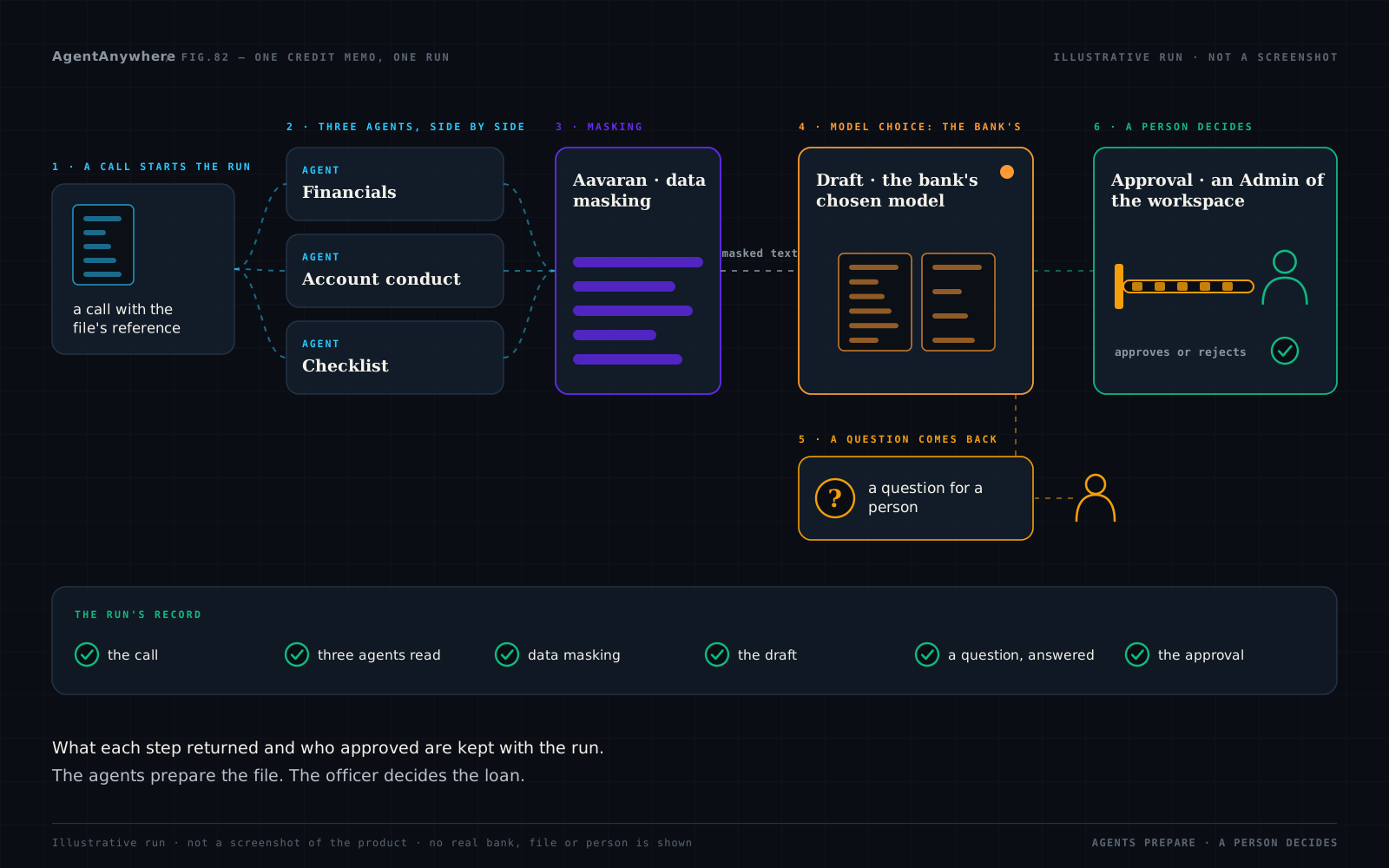
1. Orchestration: a call starts the run
The bank's system calls the workflow's own address with the file's reference. The workflow was drawn in Flow Studio by the bank's team.
2. Orchestration: three agents read at the same time
They are the bank's own agents, running where the bank runs them, and each is given the file's reference: one extracts the financials, one summarises account conduct, one checks the documents against the bank's checklist. Steps that do not depend on each other run side by side.
3. Guardrail: masking before the drafting model
An AgentAnywhere Aavaran (data masking) step is given what the reading agents returned. The steps after it are given the masked text, not the original.
4. Model choice: the bank's
The drafting step asks the model the workspace has chosen: its own account with the provider it has approved, or Manthan served inside its perimeter. If the model declines or its filter stops the answer, the step fails and says why; a refusal is not passed on as a draft.
5. Orchestration: a question comes back
A partner's valuation agent asks which of two property documents is current. The run waits, the question is listed with the steps waiting for a person, and the answer typed there is sent to the agent once.
6. Guardrail: a person decides
The workflow stops at an approval step. An Admin of the bank's workspace approves or rejects, and the steps after it do not run until then. What happens after approval, such as writing to the loan system, is the bank's own agent or integration.
Who did what on the file?
The approval is recorded with the approver's sign-in and the time. Registering or changing an agent, and giving or removing the role that may approve, are each an audit event that can be searched and exported. Audit events are kept 90 days unless the deployment sets another period, and a setting of 0 keeps everything. See the audit trail post.
What happened in the run, and for how long is it kept?
The run shows each step, how long it took, and what it returned or why it failed; a run that failed can be run again. A run's step-by-step record is kept 30 days unless the deployment sets another period, and there too 0 keeps everything. A bank that must show a file a year later sets both periods to its own retention rule before it starts. See the observability post.
What does it not do?
It does not make a credit decision, score a borrower or replace the bank's credit policy. The agents are ones the bank builds or registers; AgentAnywhere runs them and supplies no underwriting model. A drafting step on a provider outside the bank sends the masked text to that provider under the bank's own agreement, and that call does not pass through Kavach. The case is illustrative, not a customer's.
For how steps, approvals and questions fit together in a workflow, see Orchestrating AI agents; for what a guardrail can and cannot promise, see the guardrail post.
Frequently asked questions
What do AI agents in banking do on a credit memo?
They read and draft: extract the financials, summarise account conduct, check documents against a checklist and draft the opinion. A credit officer decides.
Can AI agents approve a loan on AgentAnywhere?
No. The workflow stops at an approval step and the steps after it do not run until an Admin of the bank's workspace approves.
Which model drafts the memo?
The model the bank's workspace has chosen: its own account with the provider it has approved, or Manthan served inside its perimeter.
Is customer data masked before the model?
Yes, when the workflow has an AgentAnywhere Aavaran (data masking) step before the drafting step; the steps after it are given the masked text, not the original.
How long is the record of a run kept?
By default a run's step-by-step record is kept 30 days and audit events 90 days. Both periods are set per deployment, and 0 keeps everything.
What happens if the model refuses to draft?
The step fails and says why in the provider's words; nothing is passed to the next step as if it were a draft.
Written by
AgentAnywhere Research
The team that builds the platform and the models
AgentAnywhere Research writes about the platform, the model families and the trust layer we build and run in India. Where a figure is ours, it says what it covers; where something is a demonstration, it says so.