
Why multi-agent pilots stall
The first agent usually works. The trouble starts when it has to hand work to a second agent, call a core banking system that is slow on Monday mornings, wait for a compliance officer who is in a meeting, and pick up again after a deployment restarted the service.
Most agent frameworks treat those moments as edge cases. In a regulated process they are the process. A KYC exception, a claims escalation, a maintenance work order: each is a chain of steps where the expensive failures happen between the steps, not inside them.
What Orchestrator gives you
Agents as services with contracts
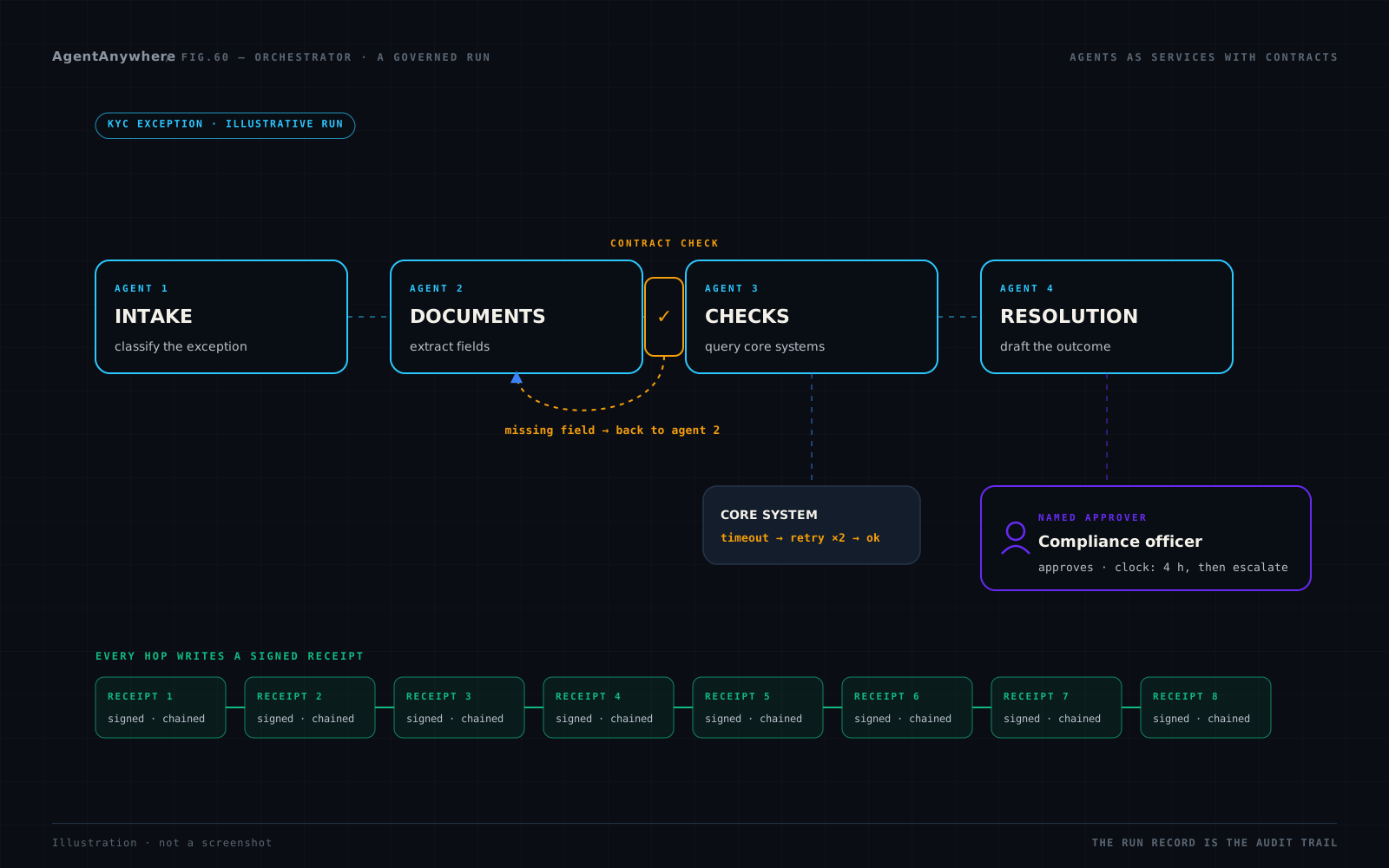
Each agent declares what it accepts, what it returns, which tools it may call and what side effects it can cause. The contract is the unit you review, version and approve.
Typed handoffs
Output from one agent becomes input to the next through an explicit, validated transformation, not a free-text rewrite. A malformed handoff is caught at the boundary.
Retries, fallbacks, escalation
Each step declares how many times to retry, what to fall back to, and whom to escalate to, so a timeout or a rate limit becomes a handled event rather than a stuck case.
Human steps with a clock
Consequential steps pause for a named approver who sees the context. If nobody responds in time, the workflow escalates instead of waiting forever or proceeding alone.
Observable by default
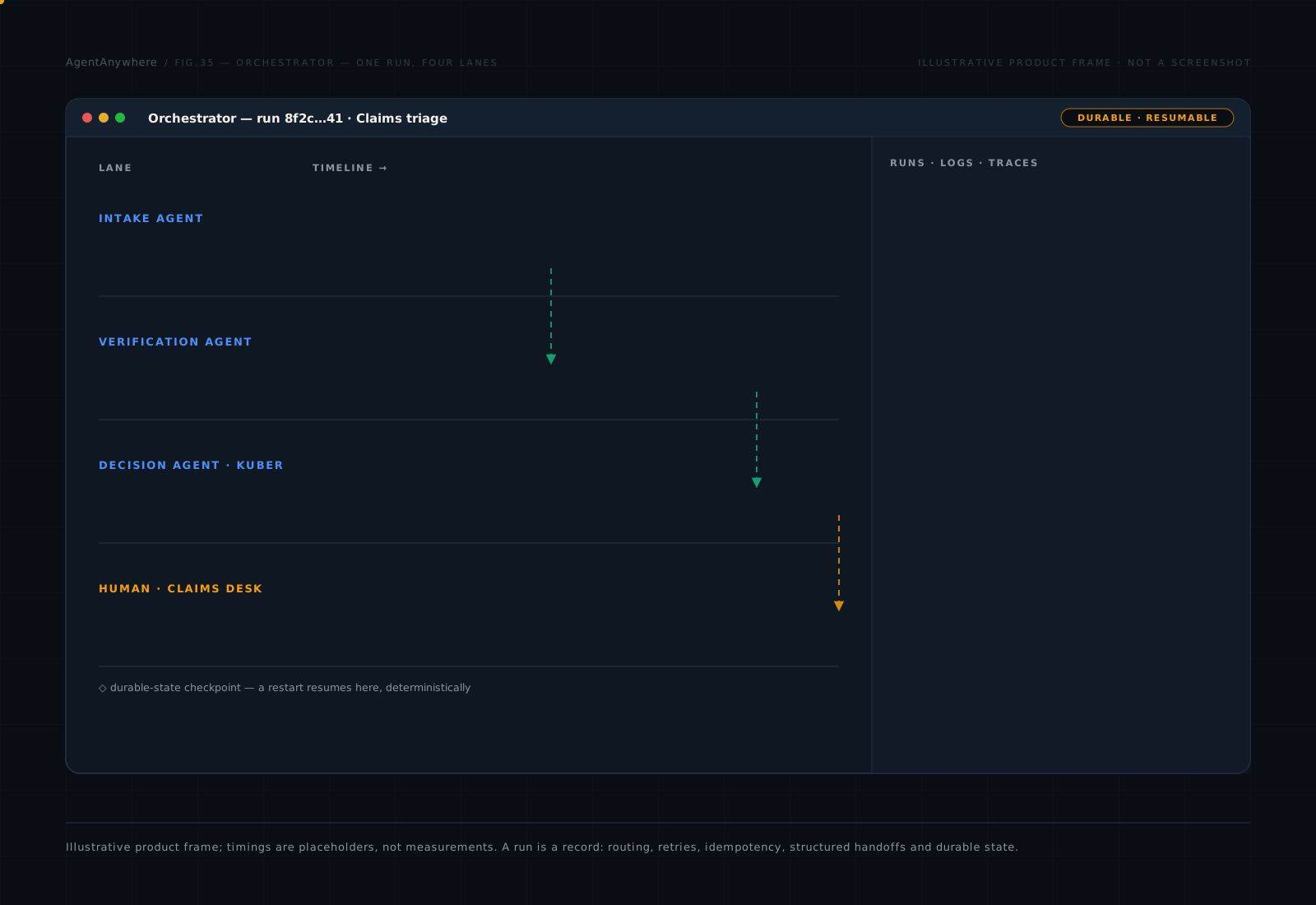
Every run, agent invocation, tool call and handoff is visible as one trace, so operations, engineering and audit look at the same record.
A signed record of every run
Each step writes a signed Trust Receipt: inputs in masked form, the model and version, the policy applied, the approver and the time.
Where teams use it first
KYC and onboarding exceptions
Intake, document extraction, checks against core systems and a drafted resolution, with the compliance officer approving the outcome.
Complaints and grievances
Classification, masking, history lookup and a draft response, routed to the right queue with the regulator's clock visible on every case.
Claims and underwriting support
Document agents, policy checks and a human underwriter who decides, with every document the agents read on record.
Maintenance and operations
Work orders that pull telemetry, procedures and parts availability, then wait for an engineer's sign-off before anything is scheduled.
Proposal and document desks
Research, drafting, compliance checking and review agents working on one document, with a named owner approving what goes out.
Engineering workflows
Coding, testing and review agents in a pipeline where a human merges, and the record shows which agent wrote what.
Outcomes
For operations
Fewer stuck cases. Timeouts, missing data and absent approvers are handled paths, not tickets.
One view of the work. Every case shows which agent did what, where it is waiting and why.
For risk and audit
A person on every consequential step, by design rather than by habit.
Evidence without a scramble. The run record is the audit trail; nobody reconstructs it from logs after the fact.
How it fits the platform
Orchestrator runs the agents designed in Flow Studio or built in Agent Lab, registered in the Registry and served through the gateway, where Veil masks sensitive data and Kavach screens model calls. It runs in your cloud, on-premises or air-gapped with Swaraj. See the platform overview and the Orchestrator page.
The best pilot is a workflow your team coordinates by hand today. Bring one and we will run it on Orchestrator in your environment.
What we don't claim
Orchestrator makes a multi-agent workflow accountable and recoverable; it does not make the agents correct. The run views on this page are illustrative frames built from the product's own panels, not screenshots. Integration with your core systems is done through adapters and, where needed, with our engineers.
Frequently asked questions
What is multi-agent orchestration?
Multi-agent orchestration is the coordination of several AI agents, tools and people into one workflow: deciding which agent receives which input, validating what they hand to each other, handling failures and waiting for human approvals, and recording what happened.
What does AgentAnywhere Orchestrator do?
It runs AI agents as services with contracts, validates the handoffs between them, applies declared retries, fallbacks and escalations, pauses consequential steps for a named human approver, makes every run observable, and writes a signed Trust Receipt for each step.
How do you keep a human in the loop in an AI agent workflow?
Mark consequential steps as requiring a named approver who sees the context, give the step a deadline, and define an escalation path if nobody responds, so the workflow neither stalls indefinitely nor proceeds without a decision.
Can Orchestrator run on-premises or air-gapped?
Yes. The AgentAnywhere platform, including Orchestrator, deploys in a customer's own cloud, on-premises, or air-gapped with AgentAnywhere Swaraj.
Written by
AgentAnywhere Research
The team that builds the platform and the models
AgentAnywhere Research writes about the platform, the model families and the trust layer we build and run in India. Where a figure is ours, it says what it covers; where something is a demonstration or in preview, it says so.