
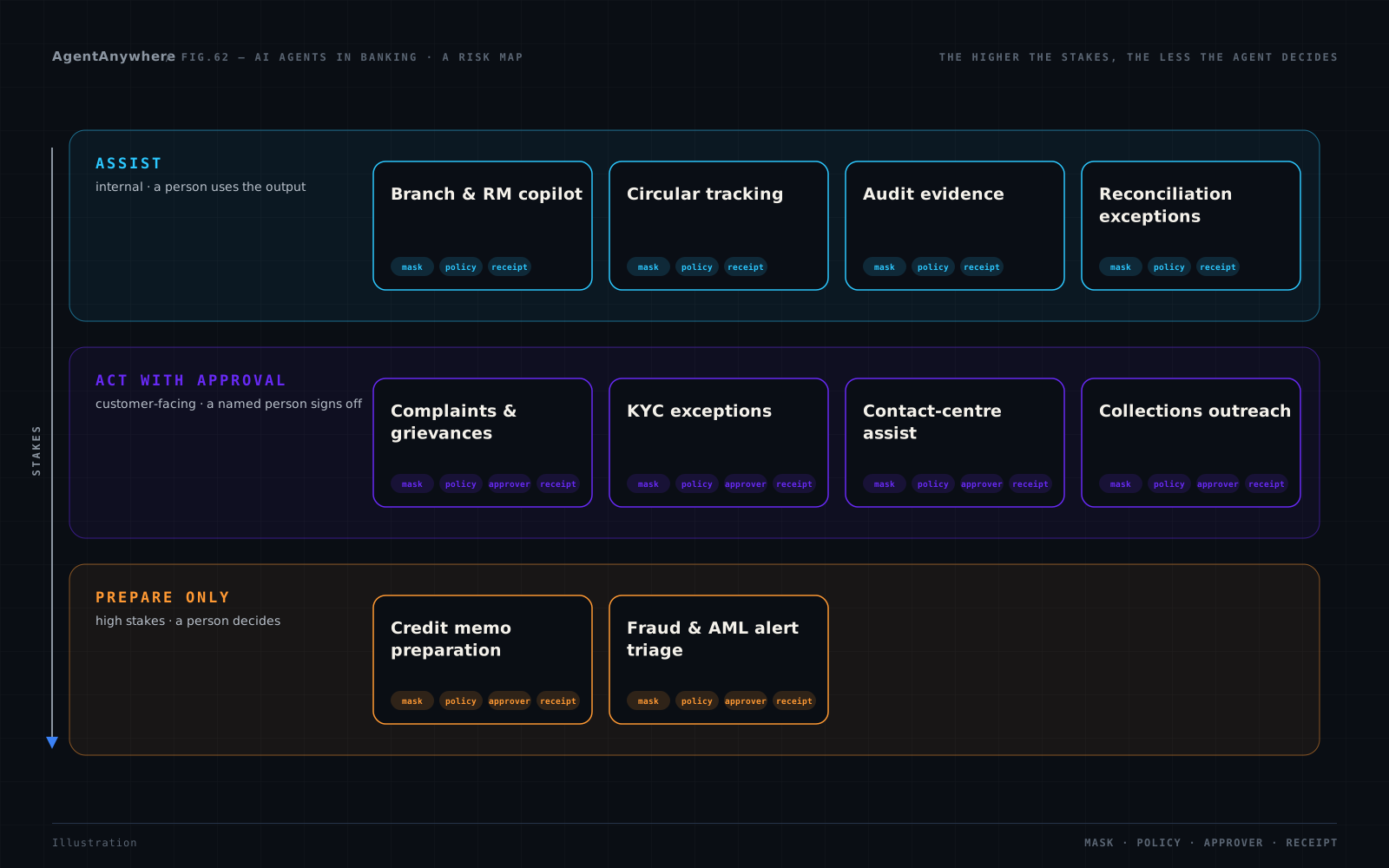
Tier 1 · Assist: internal work, a person uses the output
1 · Branch and RM copilot
Answers on products, policies and processes in English, Hindi or the staff member's language, grounded only in the bank's approved documents, with the source shown.
2 · Regulatory circular tracking
Reads new circulars and directions, summarises what changed, and maps which internal policies and processes are affected, for compliance to confirm.
3 · Internal audit evidence
Gathers evidence for control testing across systems and drafts the working paper; the auditor reviews and concludes.
4 · Reconciliation exceptions
Investigates breaks in operations and treasury reconciliations, proposes the likely cause and the fix, and queues it for the operations officer.
Tier 2 · Act with approval: customer-facing, a named person signs off
5 · Complaints and grievances
Classifies the complaint, masks personal data, pulls the history, drafts a response and routes it with the regulator's clock visible. An officer approves before anything is sent.
6 · KYC and re-KYC exceptions
Assembles the case from documents and core systems, flags mismatches, and drafts the resolution. The KYC officer decides.
7 · Contact-centre assist
Listens to or reads the conversation in Hinglish or an Indian language, suggests the next step and drafts the wrap-up note, with card and account numbers masked throughout.
8 · Collections outreach
Prepares reminders and call notes within the bank's fair-practices policy, and routes hardship and dispute cases to a person instead of pushing on.
Tier 3 · Prepare only: high stakes, a person decides
9 · Credit memo preparation
Extracts financials and documents, checks them against policy, and drafts the credit memo with every source cited. The underwriter and the credit committee decide; the agent never approves a loan.
10 · Fraud and AML alert triage
Collects the context an investigator needs for each alert, summarises it and suggests a priority. The investigator decides, and any regulatory report is filed by a person.
The four controls every tier needs
Before and around the model
Around the decision
A named approver. Consequential steps wait for a person who sees the context, with an escalation path and a clock.
A signed record. Every call writes a Trust Receipt, and the Registry keeps the inventory of agents, models and prompts that the RBI's FREE-AI report asks banks to maintain.
Choosing the first one
Start where volume is high, the rules are written down, and a person already reviews the output: complaints, KYC exceptions and contact-centre wrap-up are the usual first three. They pay back quickly, and they build the approval habits and the evidence trail that the higher-stakes tiers will need later.
Leave credit and fraud decisions with people, and let agents make those people faster. Supervisors are signalling tolerance for early, low-risk experimentation with safeguards, and much closer scrutiny where credit, fraud and anti-money-laundering are concerned.
The models and where they run
Our banking model family, Kuber, and our service-operations family, Seva, are in private preview. The platform runs agents on the models you choose, including your existing ones, and deploys in your cloud, on-premises or air-gapped with Swaraj. ShepHertz operates a control environment certified for SOC 2 and ISO 27001 and independently assessed for HIPAA and GDPR; our alignment to the RBI's FREE-AI framework and the DPDP Act is designed to support your own assessment.
Pick one use case and we will pilot it in your environment. For the regulatory picture, read RBI FREE-AI in plain English and the DPDP Rules and your AI agents.
Frequently asked questions
What are the best AI agent use cases for Indian banks?
The usual starting points are complaints and grievance handling, KYC and re-KYC exceptions, and contact-centre assist, followed by internal copilots, circular tracking, audit evidence gathering and reconciliation exceptions. Credit and fraud decisions are better treated as prepare-only, where agents assemble context and a person decides.
Can AI agents approve loans?
They should not. In a well-governed bank, an AI agent can extract and check documents and draft a credit memo with sources, but the underwriter and credit committee make the decision. High-stakes decisions such as credit, fraud and AML attract closer supervisory scrutiny.
How do banks keep customer data safe when using AI agents?
Mask account, card and phone numbers before any model or tool sees them, enforce what each agent may access with policy outside the model, keep consequential steps with a named approver, and record every call in a tamper-evident log.
Can AI agents run inside a bank's own data centre?
Yes. The AgentAnywhere platform deploys in a bank's own cloud, on-premises or air-gapped, and can run the bank's chosen models as well as AgentAnywhere's model families.
Written by
AgentAnywhere Research
The team that builds the platform and the models
AgentAnywhere Research writes about the platform, the model families and the trust layer we build and run in India. Where a figure is ours, it says what it covers; where something is a demonstration or in preview, it says so.