
The spreadsheet problem
Ask most organisations for their AI inventory and you will get three answers from three teams: a wiki page of prompts, a folder of models, a list of vendor tools. None of them agree, and none of them knows that a prompt was edited in production last Tuesday.
That used to be an engineering inconvenience. It is becoming a regulatory problem. The RBI's FREE-AI report recommends an inventory of AI systems, and the RBI's 2026 draft guidance on model risk management, still a consultation draft, asks for model inventories and board-approved frameworks. The DPDP Rules ask Significant Data Fiduciaries for due diligence on algorithmic software. All of them assume you know what you run.
What every registry record carries
Identity and a named owner
A unique, permanent identifier and a person accountable for it. Ownership changes are recorded, and artifacts without an owner cannot reach production.
Lineage
Which flow version uses which prompt, which model and which tools, reconstructable end to end when someone asks how a decision was made.
Approvals at every gate
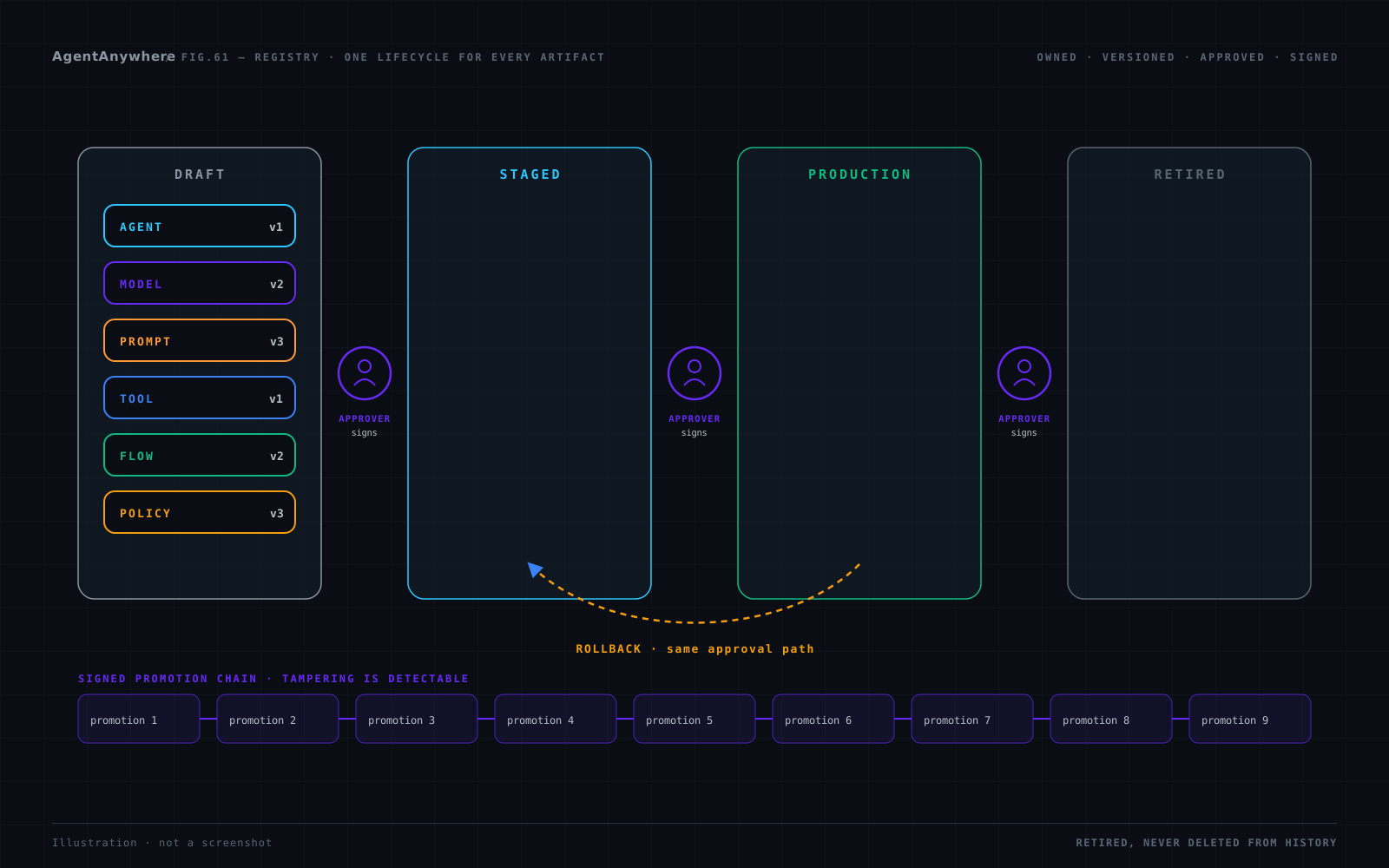
Draft, staged, production, retired. Moving between states needs the approvers your governance policy names.
A signed history
Each promotion is signed and linked to the one before, so a changed record is detectable without trusting the reporting screen.
Versions and diffs
Compare any two versions of any artifact, including prompts and policies, not only code and weights.
Rollback as a normal release
Reverting a bad change goes through the same approvals and leaves the same evidence as shipping a good one.
Built for two readers
Engineering
One typed interface to register, version, promote, roll back and retire, used by the UI, the SDK and the deployment pipeline alike. No side door for urgent fixes.
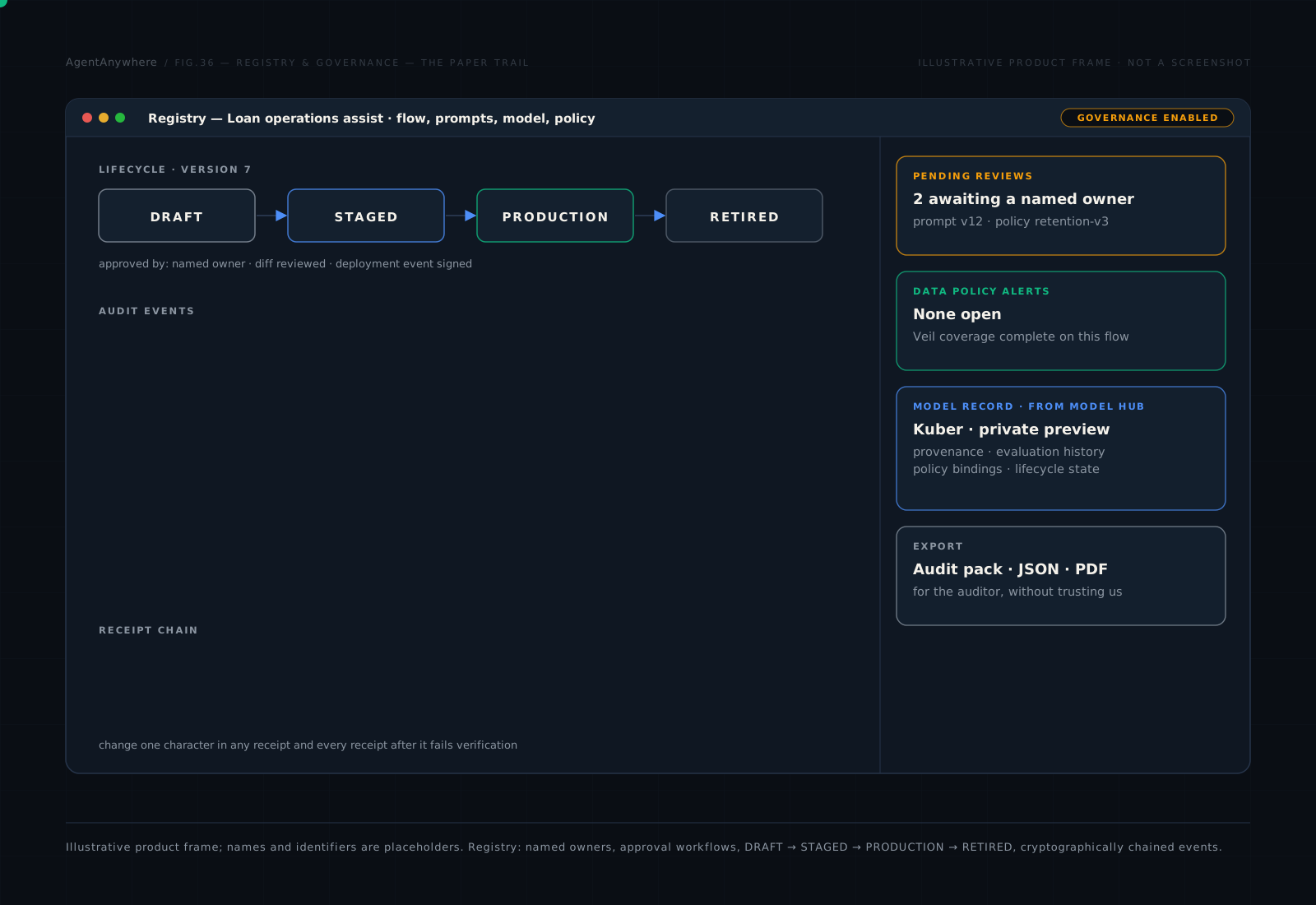
Models come in through Model Hub, the governance-aware model registry, so model identity, evaluation history and bound policies sit in the same record as the agents that use them.
Audit and risk
A query surface built for review: who promoted what, when, on which evidence, under which policy. Exportable for your governance tooling.
Point-in-time answers: what was running in production on the day a complaint arrived, even if it has since been retired.
Where it pays off first
Banks and NBFCs
An AI inventory with owners and validation evidence, ready for FREE-AI-style reviews and model-risk teams.
Insurers
Prompt and policy changes in claims and underwriting agents approved and recorded like any other product change.
Defence and government
A controlled configuration record for every AI component on an accredited system, inside an air-gapped deployment.
Space and critical operations
Configuration control for the AI in mission tools, with the same discipline as flight and ground software baselines.
Start with what you already run
A Registry pilot starts by importing the AI artifacts you already have, wherever they live, and reconstructing their records: owners, versions, where they run. It ends with an inventory under governance, owned by your team. Request a pilot, or read how the Orchestrator runs what the Registry governs. See also the Registry page.
We do not claim that an inventory makes AI safe. It makes AI accountable, which is what lets you find out. Our alignment to the RBI's FREE-AI framework and the DPDP Act is designed to support your own assessment, not to replace it.
Frequently asked questions
What is an AI inventory?
An AI inventory is a maintained record of every AI system an organisation runs: what it is, what it is used for, who owns it, what data and models it uses, which version is live, and what evidence supports its use. Regulators including the RBI, through its FREE-AI report, recommend one.
What is the difference between a model registry and an AI registry?
A model registry tracks models. An AI registry, like AgentAnywhere Registry, tracks every artifact that shapes an AI decision: agents, flows, prompts, tools, policies and models, with owners, lineage, approvals and history in one record.
Why do prompts need version control and approval?
Because changing a prompt can change an AI system's behaviour as much as changing its code or model. In a regulated process, a prompt edit should be versioned, reviewed and approved like any other change, and recorded so it can be traced later.
Does the RBI require an AI inventory?
The RBI's FREE-AI committee report recommends that regulated entities maintain an inventory of AI systems, and the RBI's 2026 draft guidance on model risk management, issued for consultation, includes model inventories. Banks should track the final directions.
Written by
AgentAnywhere Research
The team that builds the platform and the models
AgentAnywhere Research writes about the platform, the model families and the trust layer we build and run in India. Where a figure is ours, it says what it covers; where something is a demonstration or in preview, it says so.