
What does a fault report ask for?
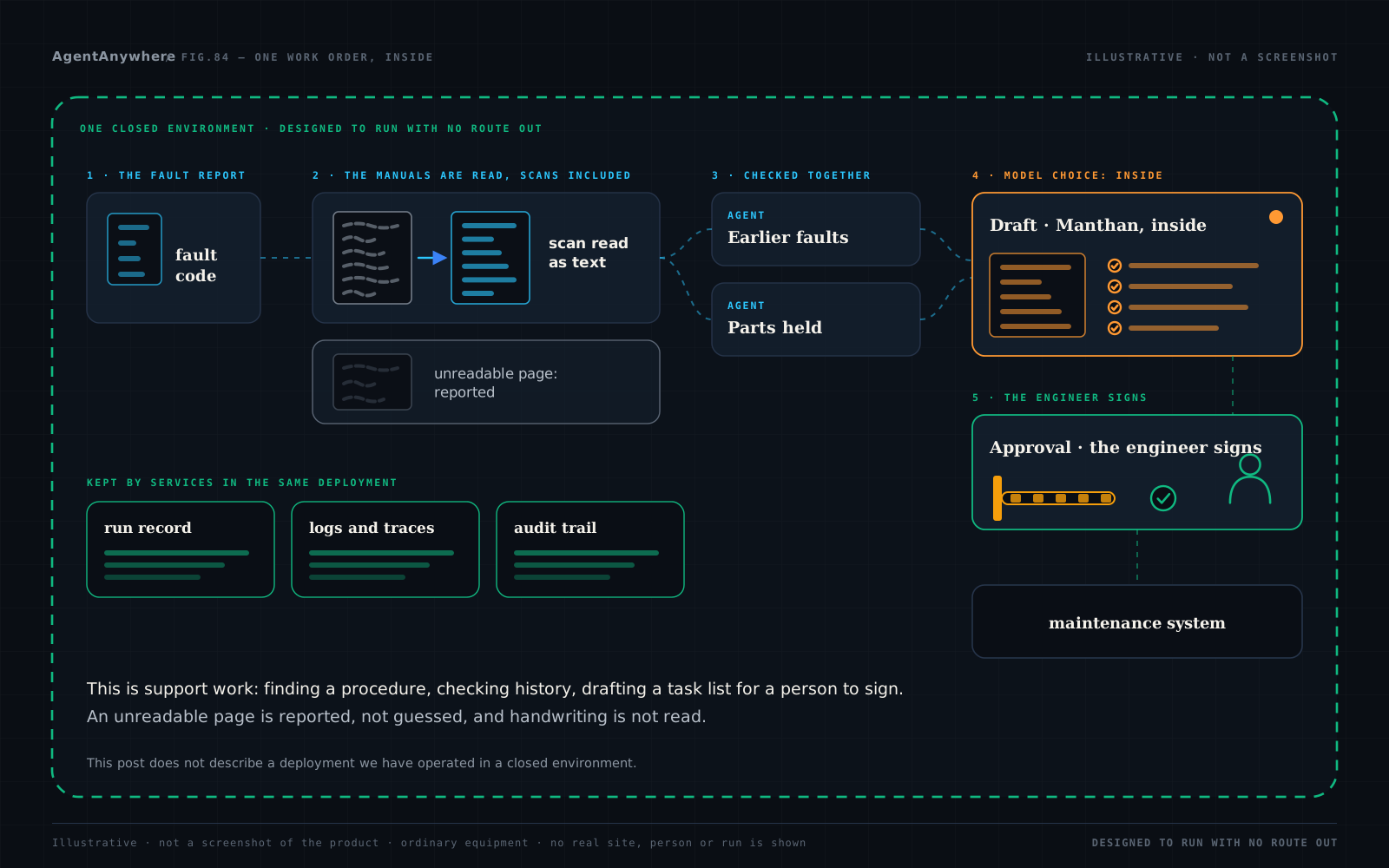
A generator set reports an intermittent shutdown. The technician has the fault code, a manual scanned years ago, and a logbook. The work is to find the procedure, check whether this has happened before, see if the parts are held, and write a task list an engineer will sign. None of it may be sent outside.
What can air-gapped AI agents do on a work order?
1. Orchestration: the fault report starts the workflow
One drawn by the depot's own engineers.
2. Orchestration: the manuals are read, scans included
A knowledge step finds the passages that match. A page that exists only as a scan is read by the knowledge service's text recognition first; an unreadable page is reported, not guessed, and handwriting is not read.
3. Orchestration: history and stores are checked together
One agent looks up earlier faults, another checks parts held. Neither waits for the other.
4. Model choice: inside
The drafting step asks Manthan, served in the same environment. No outside provider is connected.
5. Guardrail: the engineer signs
The workflow stops at an approval step; the steps after it do not run until an Admin of the workspace approves.
What is designed to stay inside?
| What | Where it is designed to be |
|---|---|
| What: The platform and its database | In the same closed environment |
| What: The model that drafts | Served in the same environment |
| What: Run records, logs, traces, alert rules | Kept by services in the same deployment |
| What: The audit trail | In the deployment's own database |
| What: Keys | Stored encrypted, listed by field name only, never shown again |
An alert is raised inside the deployment; sending it to people is set up per deployment. Audit events are kept 90 days and a run's record 30 days unless the deployment sets other periods. See the audit trail and observability posts.
The line
This is support work: finding a procedure, checking history, drafting a task list for a person to sign. The platform does not decide what is serviceable, does not release equipment, and has no part in targeting or the use of force.
What does it not do?
It does not replace the manual, the engineer or the release procedure. This post does not describe a deployment we have operated in a closed environment. On the Integrations page the outside model providers are still listed; in a closed environment they cannot be reached and none is connected. The work order is illustrative, on ordinary equipment.
For how steps and approvals fit together in a workflow, see Orchestrating AI agents; for what a guardrail can and cannot promise, the guardrail post.
Frequently asked questions
What are air-gapped AI agents?
AI agents designed to run in an environment with no route out: the platform that runs them, the model they ask and every record they leave are inside it.
How is AgentAnywhere designed to run air-gapped?
The model step is pointed at a model served in the same environment, and logs, traces, alert rules and the audit trail are kept by services in that deployment.
What can AI agents do in equipment maintenance?
Find the procedure in the manuals, look up earlier faults, check parts held and draft a task list. An engineer reviews and signs.
Can AI read scanned maintenance manuals?
Yes. A page that exists only as an image is read as text before it is searched; an unreadable page is reported, not guessed, and handwriting is not read.
Who is responsible for the work order?
The engineer who approves it. The approval is recorded with that person's sign-in and the time.
Written by
AgentAnywhere Research
The team that builds the platform and the models
AgentAnywhere Research writes about the platform, the model families and the trust layer we build and run in India. Where a figure is ours, it says what it covers; where something is a demonstration, it says so.